
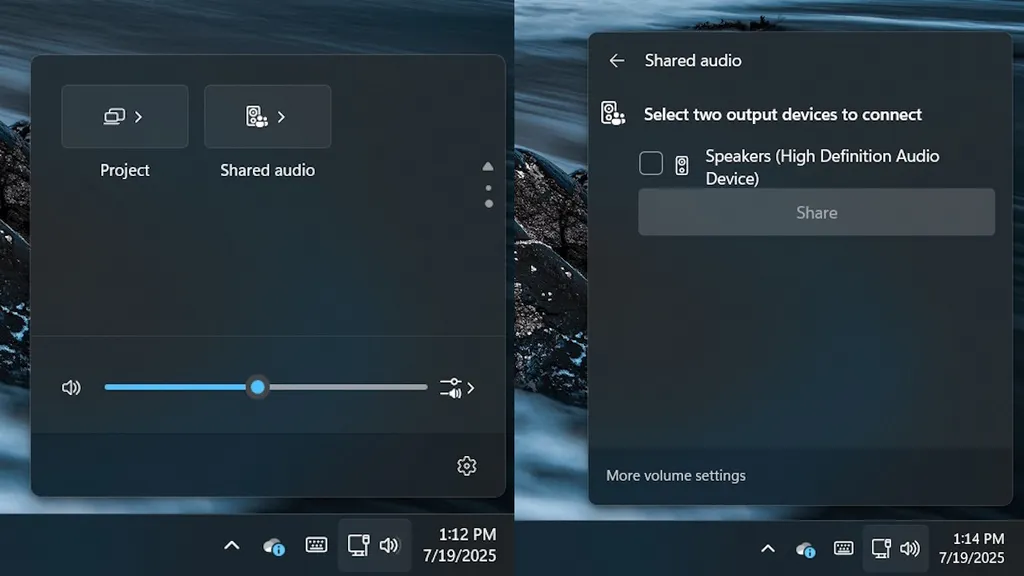
Microsoft’s introduction of Shared Audio in Windows 11 could significantly reshape the landscape of collaborative audio experiences. This feature, currently in testing within the Windows Insider program, allows two pairs of wireless headphones, speakers, or hearing aids to connect simultaneously to a single device. By leveraging Bluetooth Low Energy (LE) Audio, Shared Audio promises to enhance energy efficiency and sound quality, making it a compelling addition to the Windows ecosystem.
The implications of this development are far-reaching. For consumers, it means the end of awkwardly sharing a single pair of headphones or struggling with subpar sound quality during group listening sessions. Whether watching a movie with a friend or enjoying music together, users can now enjoy a seamless, high-quality audio experience without the need for physical device sharing. This feature is particularly beneficial for those who value convenience and quality in their audio experiences.
For the tech industry, Microsoft’s move signals a push toward a more universal Bluetooth audio standard. The adoption of Auracast technology, which is also being integrated by Google and Samsung, indicates a growing trend towards standardization. This could lead to increased compatibility and interoperability across different devices and platforms, ultimately benefiting consumers and driving innovation in the audio sector.
The rollout of Shared Audio is currently limited to select Copilot+ PCs, including the Surface Laptop and Surface Pro models. However, it is expected to expand to other devices such as the Samsung Galaxy Book5 series and additional Surface models in the future. This gradual rollout strategy allows Microsoft to gather feedback and refine the feature before its official release in 2025.
In the broader context, Shared Audio could influence how other tech giants approach multi-listener experiences. As Microsoft, Google, and Samsung continue to integrate Auracast technology, the competition to offer the best collaborative audio solutions is likely to intensify. This could lead to rapid advancements in audio technology, benefiting consumers with more options and better performance.
Moreover, the feature’s reliance on Bluetooth LE Audio highlights the growing importance of energy-efficient audio codecs. As more devices adopt this technology, we can expect to see improvements in battery life and sound quality, making wireless audio solutions more attractive to a wider audience.
In conclusion, Microsoft’s Shared Audio feature represents a significant step forward in the evolution of collaborative audio experiences. By embracing Bluetooth LE Audio and Auracast technology, Microsoft is not only enhancing the user experience but also contributing to the development of a more universal audio standard. As the feature rolls out to more devices, it has the potential to reshape the audio landscape, driving innovation and competition in the sector.

