
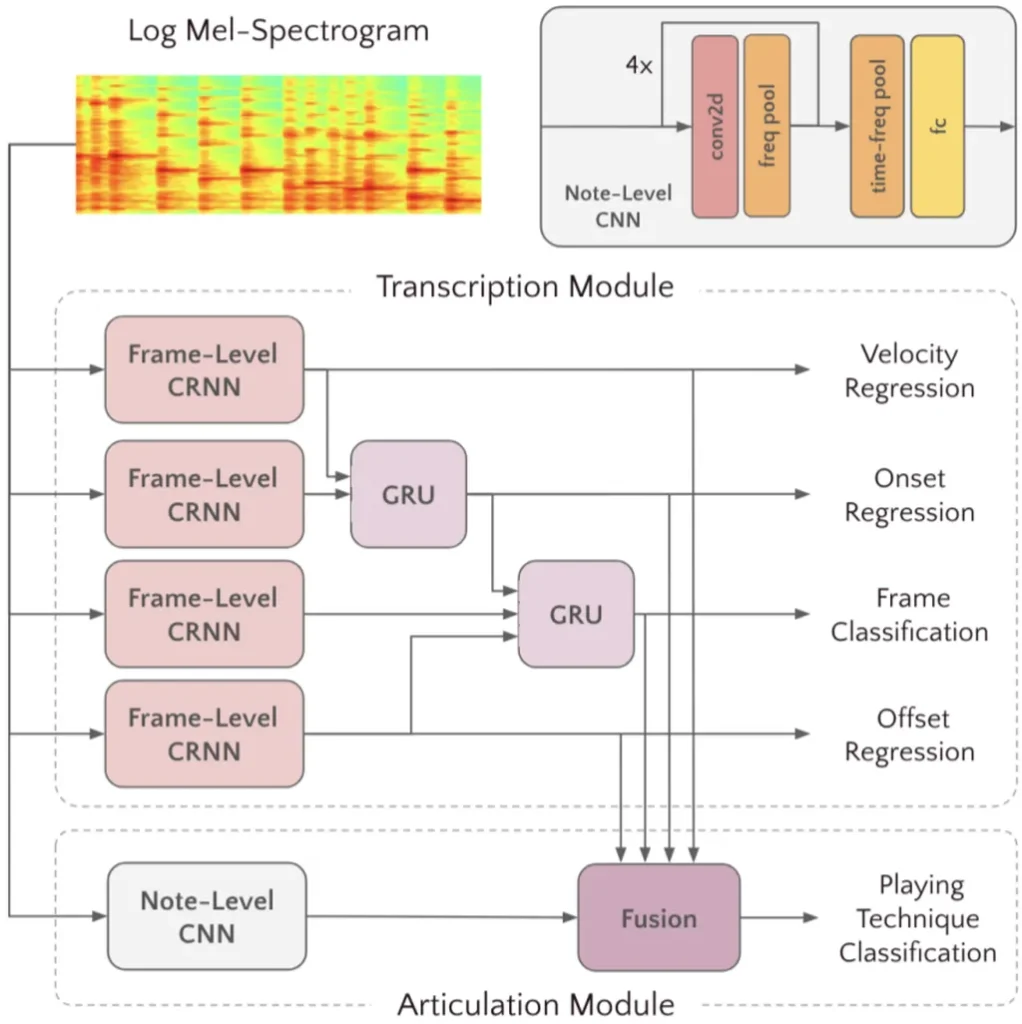
In a groundbreaking advancement for music technology, researchers have developed a novel model capable of transcribing not just the notes of a violin performance, but also the playing techniques used to produce them. This innovation, known as VioPTT (Violin Playing Technique-aware Transcription), marks a significant step forward in the field of automatic music transcription, which has traditionally focused on pitch and timing information while overlooking the expressive nuances that bring music to life.
The VioPTT model is designed to capture the unique timbres and expressive elements that violinists employ to convey emotion and artistic intent. By incorporating playing techniques into the transcription process, VioPTT offers a more comprehensive and nuanced understanding of a violin performance. This is achieved through an end-to-end approach that integrates pitch onset and offset detection with playing technique prediction, all within a single, lightweight framework.
To train their model, the researchers created MOSA-VPT, a high-quality synthetic dataset that simulates various violin playing techniques. This synthetic data approach circumvents the need for manually labeled annotations, which can be time-consuming and expensive to obtain. By leveraging this dataset, the VioPTT model demonstrated strong generalization capabilities, effectively transcribing real-world violin performances with a high degree of accuracy.
The practical applications of VioPTT are vast and promising. For music producers and composers, this technology can provide valuable insights into the expressive techniques used in violin performances, enabling more nuanced and authentic arrangements. Music educators can utilize VioPTT to analyze and teach violin techniques, offering students precise feedback on their playing style. Additionally, this technology can enhance music information retrieval systems, making it easier to search and organize vast libraries of violin music based on both pitch and playing technique.
Moreover, VioPTT’s ability to transcribe playing techniques opens up new possibilities for music generation and synthesis. By understanding and replicating the subtle expressive nuances of violin playing, composers and sound designers can create more realistic and emotionally resonant digital music. This could revolutionize the way music is created and experienced, bridging the gap between human performance and digital reproduction.
In conclusion, VioPTT represents a significant leap forward in the field of automatic music transcription. By capturing the expressive techniques of violin playing, this innovative model offers a more comprehensive and nuanced understanding of musical performances. Its practical applications span music production, education, and information retrieval, promising to enhance the way we create, teach, and experience music. As research in this area continues to evolve, we can expect even more sophisticated tools that capture the full richness of musical expression. Read the original research paper here.