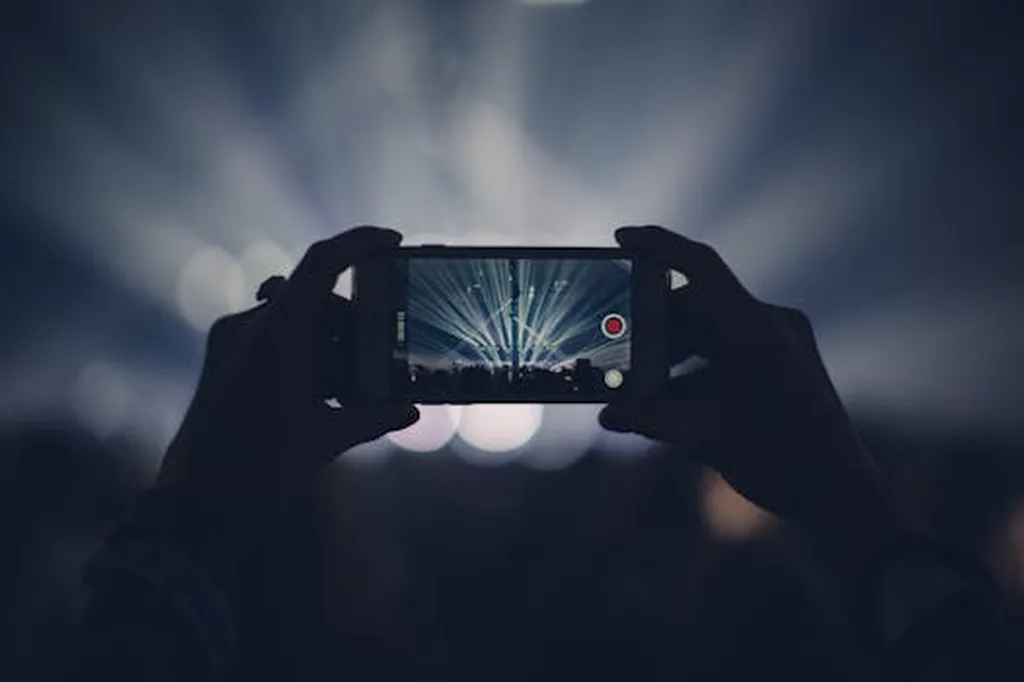
Imagine capturing a stunning concert performance, only to find your photos marred by unwanted glare and haze. This isn’t just a photographer’s nightmare; it’s a persistent problem in compact optical systems, from single-lens cameras to cutting-edge metalenses. The culprit? Veiling glare, caused by stray light scattering off imperfect optical surfaces and coatings. Unlike typical lens aberrations, veiling glare is spatially varying and depth-independent, making it a tough nut to crack with conventional dehazing models. This challenge has left a gap in the market for effective solutions, particularly in complex real-world environments where image quality is paramount.
Enter VeilGen, a groundbreaking generative model developed by a team of researchers led by Xiaolong Qian. VeilGen is designed to simulate veiling glare by estimating its underlying optical transmission and glare maps in an unsupervised manner. The model leverages Stable Diffusion (SD)-based priors to regularize the process, enabling the creation of paired datasets that realistically mimic the compound degradation of both optical aberrations and veiling glare. This innovation addresses a critical bottleneck in the development of data-driven veiling glare removal models: the lack of high-quality, paired training data.
But VeilGen is just the beginning. The researchers also introduced DeVeiler, a restoration network trained with a reversibility constraint. DeVeiler uses the latent maps predicted by VeilGen to guide the veiling glare removal process, effectively reversing the scattering model’s effects. The combination of VeilGen and DeVeiler offers a robust solution for enhancing image quality in compact optical systems, ensuring that the final images are not only visually pleasing but also physically accurate.
The team’s extensive experiments on challenging compact optical systems have demonstrated that their approach delivers superior restoration quality and physical fidelity compared to existing methods. This suggests that VeilGen reliably synthesizes realistic veiling glare, and its learned latent maps effectively guide the restoration process in DeVeiler. The implications for the music and audio industry are significant. High-quality imaging is essential for capturing and producing content, from live performances to music videos. By addressing the vexing issue of veiling glare, VeilGen and DeVeiler pave the way for clearer, more vibrant visuals that can enhance the overall audience experience.
The researchers have made all code and datasets publicly available on GitHub, inviting the broader community to explore and build upon their work. This open-access approach fosters collaboration and innovation, potentially accelerating the development of new solutions for optical imaging challenges. As the technology evolves, we can expect to see even more sophisticated tools that push the boundaries of what’s possible in visual and audio production.
In the fast-paced world of music and audio technology, staying ahead of the curve is crucial. The advent of VeilGen and DeVeiler represents a significant leap forward in optical imaging, offering a powerful new tool for producers, developers, and enthusiasts alike. By tackling the elusive problem of veiling glare, this research not only enhances image quality but also opens up new creative possibilities. As we continue to explore the potential of these innovations, one thing is clear: the future of visual and audio production is looking brighter than ever.