
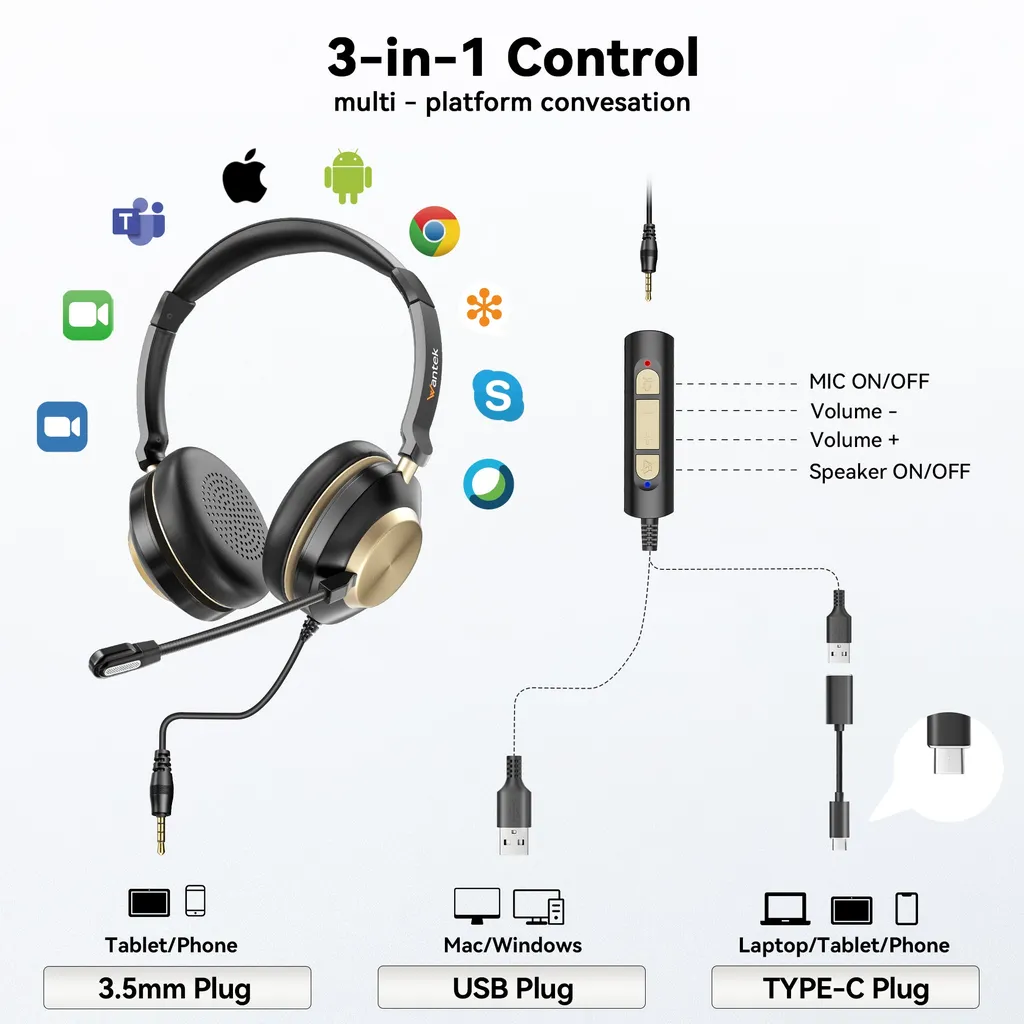
When shopping for headphones, the list of features to consider is extensive: noise cancellation, battery life, comfort, connection options, and sound quality, among others. Yet, some critical features may not be immediately apparent from a spec sheet. This oversight led me to overlook USB-C audio in the past, a mistake I won’t repeat. USB-C audio is a game-changer, and it’s a must-have for my next pair of headphones.
USB-C audio is a protocol that allows digital audio transmission over the USB Type-C interface. This means you can plug your headphones directly into a USB-C port on your device, eliminating the need for a traditional 3.5mm headphone jack. This feature is particularly beneficial for high-resolution music streaming. Despite being around for over a decade, USB-C audio is not yet mainstream, but its potential is immense. The latest specification, USB Audio Device Class 3.0, was published in 2016 by the USB Implementers Forum. The goal is simple: a single cable for everything. USB-C already supports charging, data transfer, and video, making it a vital connector today.
Here’s why USB-C audio is non-negotiable for my next headphones:
First, it allows wired listening without an adapter. Apple’s decision to remove the headphone jack from iPhones in 2016 was controversial, but it ultimately improved smartphone design. Today, most phones lack a headphone jack, relying solely on USB-C. While many headphones use USB-C for charging, only those with USB-C audio support can transmit audio over the same port. This flexibility ensures I can listen to music wired or wirelessly, depending on my needs.
Second, USB-C audio extends the longevity of wireless headphones. Bluetooth is convenient, but battery degradation is inevitable. With USB-C audio, I can bypass the battery entirely, ensuring my headphones remain functional for years, even as their battery health declines.
Third, it serves as a fallback when the battery dies or Bluetooth fails. Low battery shutdowns and connectivity issues are common frustrations with wireless headphones. USB-C audio provides a reliable alternative, ensuring uninterrupted listening.
Lastly, it enables high-resolution audio playback. The absence of a headphone jack means extra steps to listen to lossless music. Wireless headphones without USB-C audio limit hi-res audio to Bluetooth, which lacks the bandwidth for true lossless quality. With USB-C audio, I can fully utilize my hi-res music streaming service, enjoying tracks in their highest fidelity.
The headphone jack’s demise is inevitable, but USB-C audio offers a compelling alternative. It ensures long-term usability, flexibility, and superior sound quality. As the audio industry evolves, USB-C audio could become the standard, shaping the future of headphone design and user experience.

