
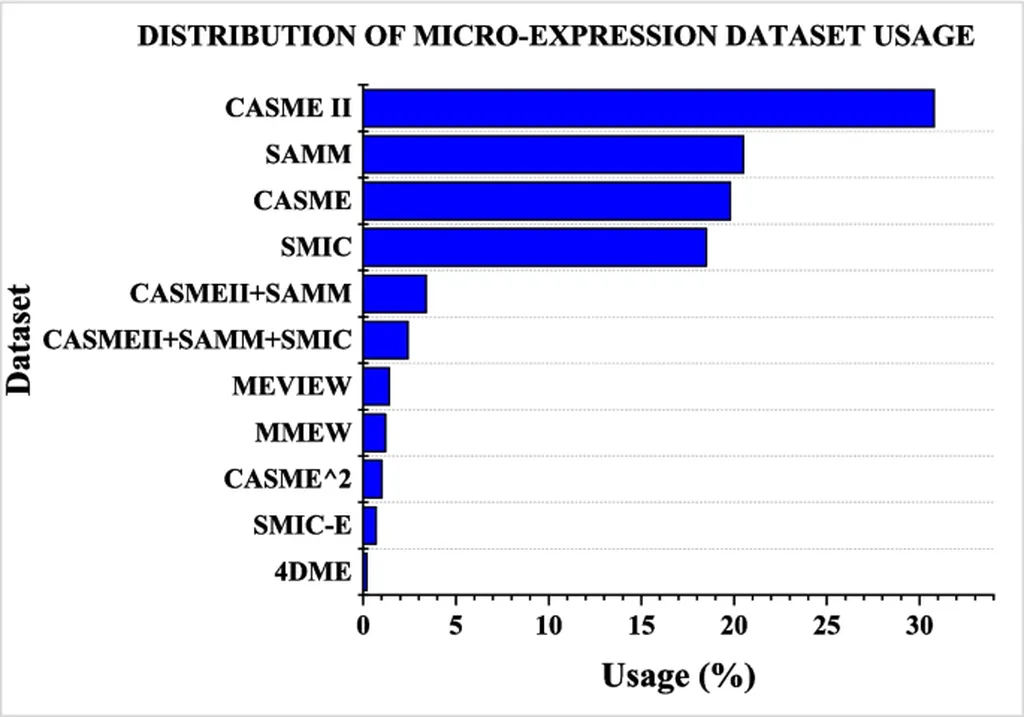
In a groundbreaking development, researchers have unveiled a novel approach to understanding micro-expressions (MEs), those fleeting facial expressions that betray concealed emotions. Traditionally, the study of MEs has been hampered by a reliance on silent, visual-only data, but a new dataset and analytical method are set to change that.
The researchers, led by Junbo Wang, have introduced the Multimodal Micro-Expression Dataset (MMED), the first of its kind to capture the spontaneous vocal cues that accompany MEs in high-stakes, ecologically valid interactions. This dataset is a significant leap forward, as it acknowledges that emotions are not conveyed through facial expressions alone, but also through accompanying vocalizations. By including these audio cues, MMED provides a more comprehensive and realistic portrayal of how emotions are expressed and perceived in real-life situations.
To analyze this rich, multimodal data, the researchers developed the Asymmetric Multimodal Fusion Network (AMF-Net). This innovative method effectively fuses a global visual summary with a dynamic audio sequence using an asymmetric cross-attention framework. In simpler terms, AMF-Net allows the model to pay attention to different aspects of the audio and visual data at different times, enabling it to capture the complex interplay between these two modalities.
The effectiveness of this approach was validated through rigorous Leave-One-Subject-Out Cross-Validation (LOSO-CV) experiments. These experiments provided conclusive evidence that audio offers critical, disambiguating information for ME analysis. In other words, the inclusion of audio data significantly improves the accuracy of ME recognition, as it provides additional context and information that visual data alone cannot.
The practical applications of this research are vast, particularly in the realm of music and audio production. For instance, understanding the subtle emotional cues conveyed through micro-expressions and accompanying vocalizations could revolutionize the way musicians and producers interpret and manipulate emotional content in their work. It could also lead to the development of more sophisticated audio-visual tools for emotion recognition and expression, enhancing the overall quality and emotional resonance of musical performances.
Moreover, this research could pave the way for more nuanced and realistic emotional expression in virtual reality and augmented reality applications, as well as in the development of more empathetic and emotionally intelligent artificial intelligence. As such, the MMED dataset and the AMF-Net method represent not just a significant advancement in the study of micro-expressions, but also a promising step forward in the broader field of emotion recognition and expression. Read the original research paper here.