In a groundbreaking stride towards unraveling the intricate world of auditory perception, researchers Hong Zhang, Jie Lin, and Shengxuan Chen have published a comprehensive review that sheds light on the multifaceted nature of timbre perception and representation. Their work, titled “Timbre Perception, Representation, and its Neuroscientific Exploration,” offers a deep dive into the science behind the unique “color” of sound that allows us to distinguish between different instruments, voices, and even digital sound sources.
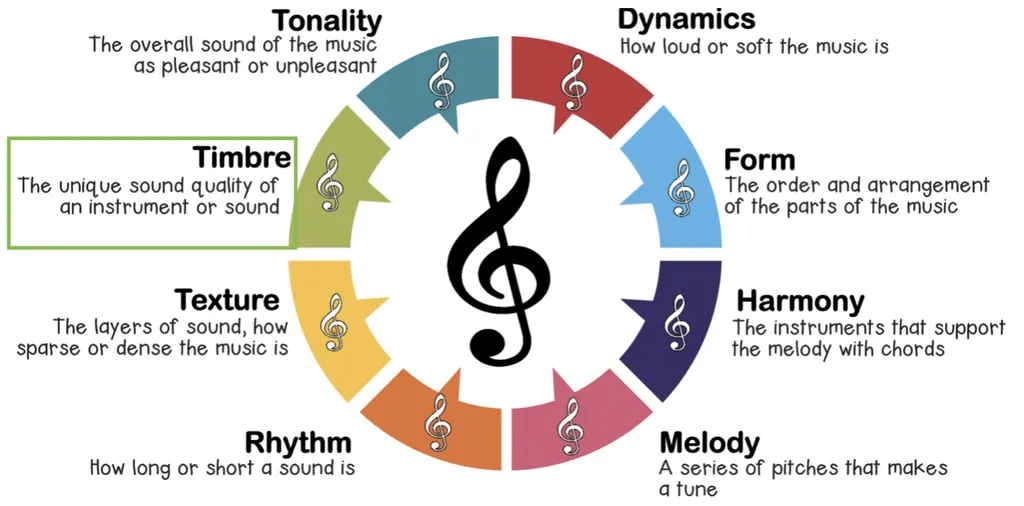
The review begins by tracing the origin of the word “timbre,” which comes from the Old French “tambour,” meaning drum, and has evolved to encompass the broad range of qualities that give a sound its unique character. The authors then embark on a journey to define and measure timbre, a task that has challenged researchers for decades due to its subjective and multidimensional nature. They explore various approaches to quantifying timbre, from the use of physical parameters like spectral centroid and spectral flux to more complex models that incorporate perceptual dimensions such as brightness, warmth, and roughness.
One of the most powerful tools for visualizing and understanding timbre is the concept of timbre space. This multidimensional space allows researchers to map out how different timbres relate to one another based on their perceptual similarities and differences. The authors discuss various techniques for constructing timbre spaces, including multidimensional scaling and principal component analysis, and highlight the insights these methods have provided into the structure of timbre perception.
The review also delves into recent advancements in timbre manipulation and representation, with a particular focus on the growing role of machine learning techniques. These methods have enabled researchers to create sophisticated models of timbre perception and to develop new algorithms for synthesizing and transforming sounds. For instance, machine learning has been used to create systems that can mimic the timbre of a wide range of instruments or even generate entirely new timbres that push the boundaries of human perception.
While the underlying neural mechanisms of timbre perception remain only partially understood, the authors discuss the current state of neuroimaging techniques used to investigate this aspect of auditory perception. They highlight studies that have used functional magnetic resonance imaging (fMRI) and electroencephalography (EEG) to identify brain regions and neural processes involved in timbre perception, as well as research that has explored the plasticity of these mechanisms in response to training and experience.
The review concludes by summarizing the key takeaways from the current state of timbre research and identifying promising future research directions. The authors emphasize the potential applications of timbre research in various fields, including music technology, assistive technologies, and our overall understanding of auditory perception. For music producers and audio engineers, a deeper understanding of timbre could lead to more sophisticated sound design tools and techniques, enabling the creation of richer, more immersive auditory experiences. In the realm of assistive technologies, timbre research could contribute to the development of more effective auditory interfaces for individuals with hearing impairments or other sensory challenges. Ultimately, the authors argue that a better understanding of timbre perception and representation will not only advance our knowledge of the human auditory system but also open up new possibilities for the creation and appreciation of music and sound.
In essence, Zhang, Lin, and Chen’s comprehensive review serves as a testament to the complexity and richness of timbre perception, offering a roadmap for future research and a glimpse into the exciting possibilities that lie ahead. As our understanding of timbre continues to evolve, so too will our ability to harness its power in the creation and appreciation of sound. Read the original research paper here.