
In the pursuit of audio perfection, the devil is often in the details, and one such detail that has long plagued the industry is sampling jitter. This subtle timing imperfection in the conversion of analog audio signals to digital data and back again can introduce distortions that affect the overall sound quality. Researchers Makoto Takeuchi and Haruo Saito have proposed a novel method for analyzing sampling jitter in audio equipment, one that could potentially revolutionize the way we evaluate and improve our audio technology.
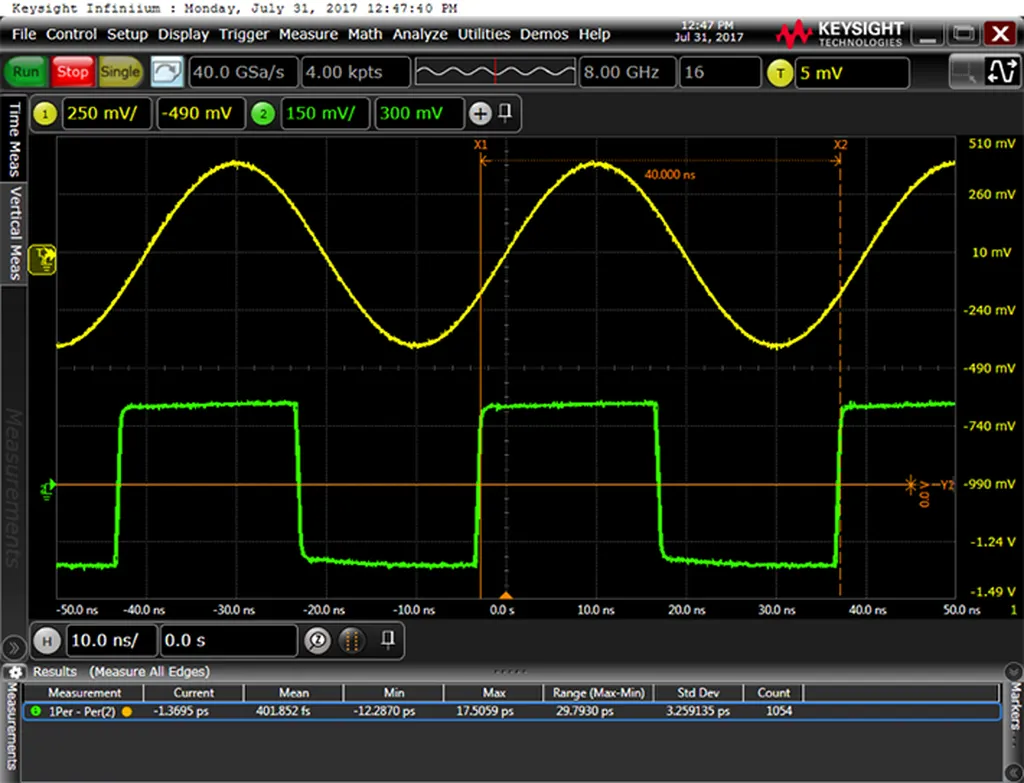
The method proposed by Takeuchi and Saito is based on time-domain analysis, a approach that examines the time fluctuations of zero-crossing points in recorded sinusoidal waves to characterize jitter. This is a significant departure from traditional methods, which often rely on frequency-domain analysis. The beauty of this new method lies in its ability to separately evaluate jitter in an audio player from those in audio recorders. This is achieved by feeding the same playback signal simultaneously into two audio recorders, providing a more comprehensive and accurate assessment of the equipment’s performance.
The researchers conducted experiments using commercially available portable devices with a maximum sampling rate of 192,000 samples per second. The results were impressive, with the method able to identify jitter values of a few tens of picoseconds in an audio player. Moreover, the proposed method can separate jitter from phase-independent noise by utilizing the left and right channels of the audio equipment. This is a significant advancement, as it allows for a more precise and nuanced evaluation of the equipment’s performance.
The implications of this research are far-reaching. The proposed method is not only applicable for the performance evaluation of audio equipment but also for signal generators and clock sources. This could lead to significant improvements in the design and manufacturing of these devices, ultimately resulting in better sound quality for consumers. Furthermore, this research could ignite a meaningful debate in the industry about the best ways to measure and mitigate sampling jitter, pushing the boundaries of what we thought was possible in audio technology.