
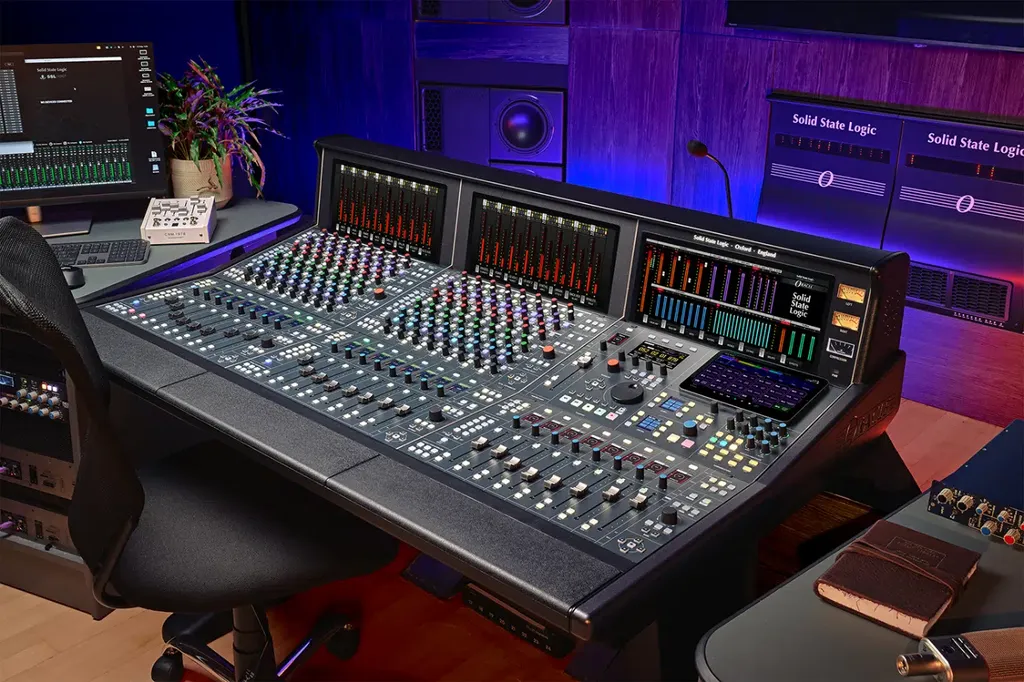
The pro audio world has long grappled with a fundamental tension: the warmth and immediacy of analog consoles versus the flexibility and recallability of digital systems. This week, Solid State Logic’s new Oracle console shatters that divide, offering a fully analog signal path with instantaneous digital recall—a breakthrough that could redefine how top-tier studios and live sound engineers work.
At its core, the SSL Oracle delivers the sonic character of SSL’s legendary E and G-series consoles, but with a twist: every knob turn, EQ curve, and routing decision can be saved and recalled in less time than it takes to boot a DAW. This is not a digital emulation, but a true analog console where every parameter is motorized and controlled via SSL’s 360° software. The result is a console that feels and sounds like a classic SSL, but adapts to modern workflows with the push of a button. “It’s the best of both worlds,” remarked one engineer in a recent Sound on Sound review. “You get the tactile, sonic experience of analog, but the recall and remote session setup that digital engineers demand”.
The Oracle’s innovation lies in its motorized components and digital control layer, which communicate seamlessly with SSL’s 360° ecosystem. This means engineers can prep sessions offsite, recall complex mixes instantly, and even adjust settings remotely—without sacrificing the analog signal path. For live sound, this could be a game-changer: imagine recalling an entire festival’s worth of artist presets at the touch of a button, or tweaking monitor mixes from a tablet backstage. The console’s EQ section, switchable between E and G-series flavors, further cements its versatility, offering the harmonic richness of SSL’s heritage with modern precision.
Industry veterans have already taken notice. “The Oracle is the first console I’ve used that doesn’t force me to choose between sound and workflow,” said a Grammy-winning producer in a recent interview. “I can track, mix, and recall sessions with the confidence that I’m not compromising on either.” This sentiment echoes across studios and live venues, where the Oracle is being hailed as a bridge between generations of audio professionals—those who cut their teeth on analog and those who’ve only known digital.
For the pro audio sector, the implications are profound. The Oracle could accelerate the adoption of hybrid workflows, where analog warmth and digital efficiency coexist. It also raises the bar for what engineers expect from high-end consoles, pushing competitors to innovate beyond the binary choice of analog or digital. As studios and touring rigs invest in future-proofing their setups, the Oracle’s blend of heritage and innovation may well become the new standard—ushering in an era where the best of both worlds is no longer a compromise, but a reality.

