
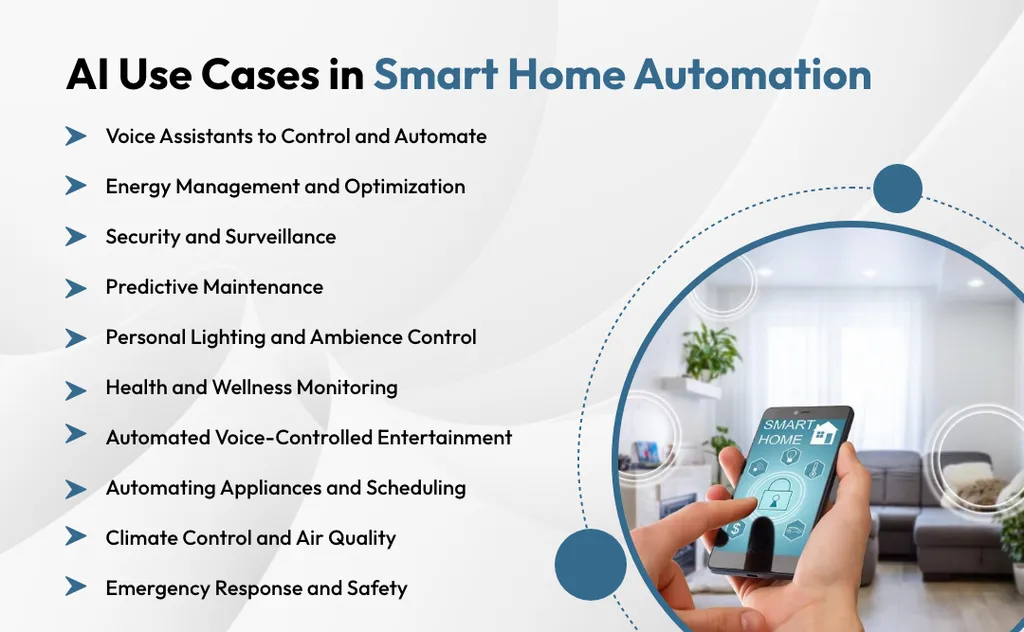
In the rapidly evolving landscape of smart-home technology, researchers Francesco Nespoli, Daniel Barreda, and Patrick A. Naylor have made significant strides in enhancing the accuracy of inter-device distance estimation using audio recordings. Their work, which leverages the unique acoustic fingerprints of environments, promises to revolutionize how smart devices interact within our living spaces.
At the heart of this research is the concept that every audio recording carries the distinct imprint of its acoustic environment, including background noise and reverberation. By focusing on a room equipped with a fixed smart speaker and one or more wearable devices—such as smartwatches, glasses, or smartphones—the researchers employed an improved proportionate normalized least mean square (PNLMS) adaptive filter. This filter was used to estimate the relative room impulse response between the audio recordings from the two types of devices.
The team introduced a novel approach by extending the definition of certain acoustic attributes of the room impulse response to its relative version. This extension allowed them to exploit a new set of features derived from the relative room impulse response. These features, combined with a sparseness measure of the estimated relative room impulse response, enable precise inter-device distance estimation. Such precision is crucial for various applications, including best microphone selection and acoustic scene analysis.
The practical implications of this research are far-reaching. For instance, in a smart home setting, accurate distance estimation between devices can significantly improve the performance of voice-controlled systems. By knowing the exact location of a user relative to a smart speaker, the system can select the optimal microphone to capture the user’s voice, thereby enhancing speech recognition accuracy and overall user experience.
Moreover, the ability to analyze the acoustic scene with high precision can lead to better environmental adaptation of smart devices. For example, a smart speaker could adjust its audio output based on the room’s reverberation characteristics, providing a more immersive and tailored listening experience. This could be particularly beneficial in environments with varying acoustic properties, such as large living rooms or small, enclosed spaces.
The researchers conducted extensive experiments in simulated rooms of different dimensions and reverberation times to validate their approach. The results demonstrated the effectiveness of their computationally lightweight method for smart home acoustic ranging applications. This lightweight nature is particularly advantageous as it ensures that the solution can be implemented on resource-constrained devices without compromising performance.
As we look to the future, the findings from this research could pave the way for more intelligent and responsive smart-home systems. The ability to accurately estimate distances between devices and understand the acoustic environment opens up new possibilities for innovation in home automation, security, and entertainment. By continuing to push the boundaries of what is possible with audio technology, researchers like Nespoli, Barreda, and Naylor are helping to shape a future where our smart homes are not just connected, but truly intelligent.