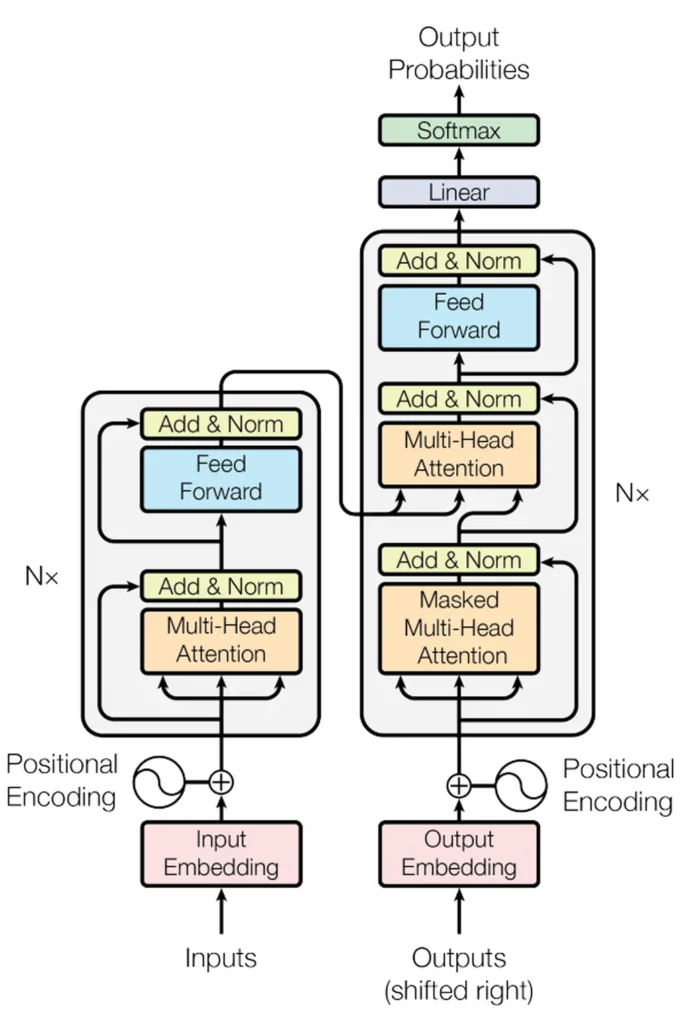
In the ever-evolving landscape of music and audio technology, a groundbreaking advancement has emerged that could redefine how we classify and understand lyrical content. Researchers have introduced a novel approach to feature fusion within the Transformer architecture, a model that has already revolutionized various fields, including natural language processing. This new method, dubbed the SFL Transformer, integrates auxiliary structural features directly into the self-attention mechanism, a core component of the Transformer model.
The SFL Transformer leverages a Contextual Gating mechanism, an Intermediate SFL, to modulate the sequence of hidden states within the BERT encoder stack. Unlike traditional methods that fuse features at the final output layer, this approach injects structural cues into the model’s mid-stack. This allows for a more nuanced and context-aware modulation of deep, contextualized semantic features using low-dimensional structural cues.
The implications of this advancement are profound. By applying the SFL Transformer to a challenging binary classification task derived from UMAP-reduced lyrical embeddings, researchers achieved an impressive Accuracy of 0.9910 and a Macro F1 score of 0.9910. These results significantly outperform the previously established state-of-the-art SFL model, which had an Accuracy of 0.9894. The SFL Transformer’s superior performance underscores the effectiveness of integrating auxiliary context mid-stack.
Moreover, the Contextual Gating strategy maintained exceptional reliability, with a low Expected Calibration Error (ECE = 0.0081) and Log Loss (0.0489). This means the model not only excels in discriminative power but also provides high-fidelity probability estimates. The research validates the hypothesis that injecting auxiliary context mid-stack is the most effective means of synergistically combining structural and semantic information.
This advancement could have far-reaching implications for the music and audio industry. Enhanced lyrical classification can lead to more accurate and context-aware music recommendation systems, improved content moderation, and deeper insights into the semantic and structural aspects of lyrical content. As we continue to push the boundaries of what is possible with deep learning, the SFL Transformer stands as a testament to the potential of innovative architectural advancements in the field of music and audio technology.