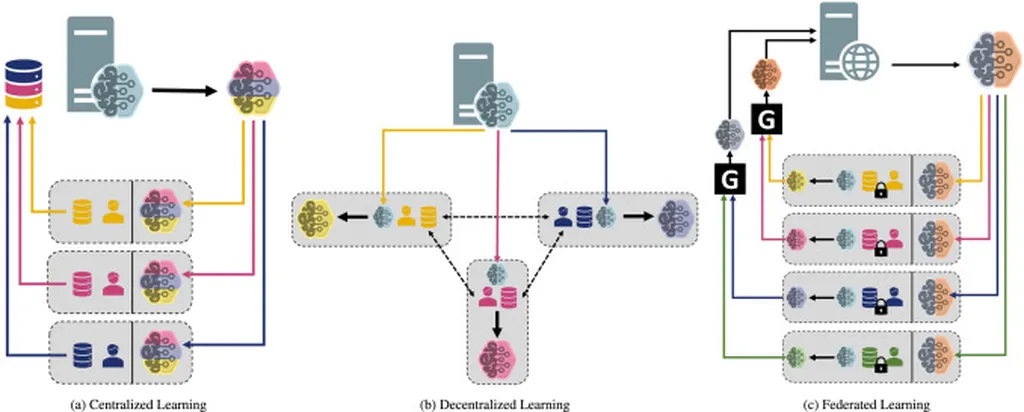
Federated Learning (FL) is a game-changer in the world of distributed machine learning, allowing models to be trained across multiple decentralized devices while keeping data private. However, most existing FL approaches focus on model heterogeneity and aggregation techniques, often ignoring the significant impact of dataset size characteristics on the training process. This is where Size-Based Adaptive Federated Learning (SAFL) comes into play, a novel framework introduced by researchers Sajid Hussain, Muhammad Sohail, Nauman Ali Khan, Naima Iltaf, and Ihtesham ul Islam.
SAFL is a progressive training framework that systematically organizes federated learning based on dataset size characteristics across heterogeneous multi-modal data. The researchers conducted a comprehensive experimental evaluation across 13 diverse datasets spanning seven modalities: vision, text, time series, audio, sensor, medical vision, and multimodal. The results revealed some critical insights. Firstly, there’s an optimal dataset size range of 1000-1500 samples for federated learning effectiveness. Secondly, a clear modality performance hierarchy emerged, with structured data (time series, sensor) significantly outperforming unstructured data (text, multimodal). Lastly, there’s a systematic performance degradation for large datasets exceeding 2000 samples.
SAFL achieved an impressive average accuracy of 87.68% across all datasets, with structured data modalities reaching an accuracy of 99% or more. The framework also demonstrated superior communication efficiency, reducing total data transfer to 7.38 GB across 558 communications while maintaining high performance. Moreover, the real-time monitoring framework provides unprecedented insights into system resource utilization, network efficiency, and training dynamics.
This research fills critical gaps in understanding how data characteristics should drive federated learning strategies. It provides both theoretical insights and practical guidance for real-world FL deployments in neural network and learning systems. As we continue to explore the potential of federated learning, frameworks like SAFL will be instrumental in optimizing the training process and maximizing model performance.