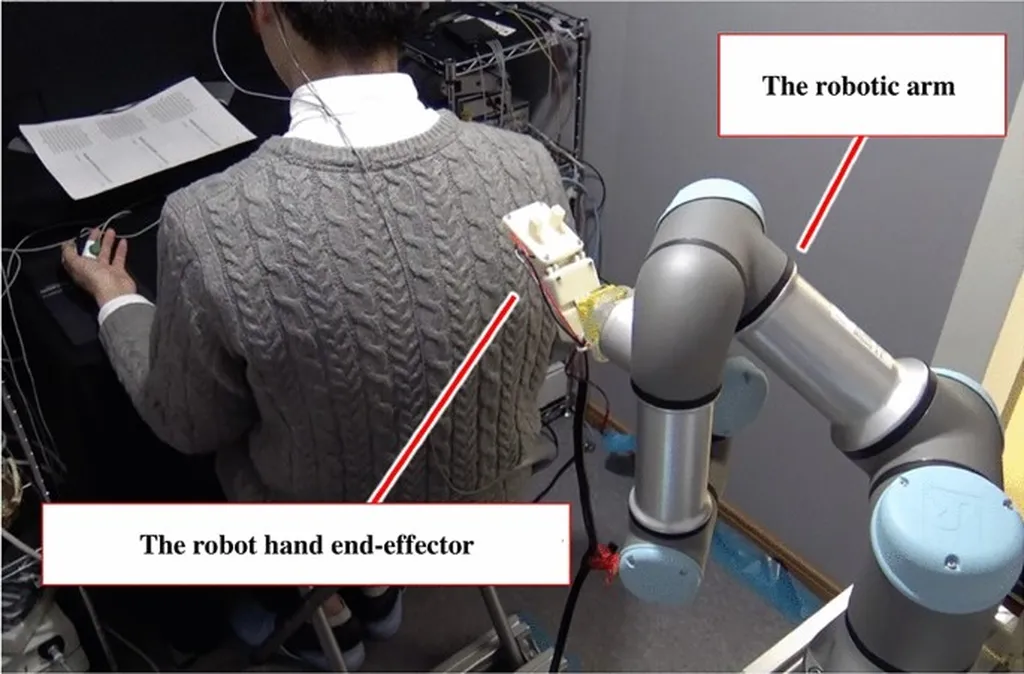
In the world of human communication, touch is a powerful and often underappreciated tool. It’s not just about the physical sensation, but also the sounds that accompany it. This multisensory experience is a rich channel for emotional expression, and it’s something that robots could potentially tap into. Researchers Qiaoqiao Ren and Tony Belpaeme have been exploring this idea, and their findings could have significant implications for the future of human-robot interaction.
The team developed a multimodal interaction system that combines haptic (touch) and auditory (sound) cues. This system uses a 5×5 grid of 25 vibration motors, synchronized with audio playback, to deliver combined haptic-audio stimuli. The goal was to see if robots could use this system to convey social gestures and emotions more effectively.
To test this, they conducted an experiment with 32 Chinese participants. They presented ten emotions and six social gestures through vibration, sound, or their combination. The participants then rated each stimulus on arousal and valence scales. The results were quite revealing.
Firstly, the combined haptic-audio modality significantly enhanced decoding accuracy compared to single modalities. This suggests that, just like in human-human interactions, the integration of touch and sound can create a more nuanced and effective channel for emotional expression in human-robot interactions.
Secondly, each individual channel—vibration or sound—effectively supported certain emotions recognition, with distinct advantages depending on the emotional expression. This means that while a combined approach is generally more effective, there may be specific situations where one modality is more suitable than the other.
Lastly, the researchers found that gestures alone were generally insufficient for conveying clearly distinguishable emotions. This underscores the importance of multisensory integration in affective human-robot interaction.
The findings of this study highlight the complementary roles of haptic and auditory cues in enhancing emotional communication. As we continue to develop and integrate robots into our daily lives, understanding and leveraging these cues could be key to creating more natural, intuitive, and emotionally resonant interactions.