
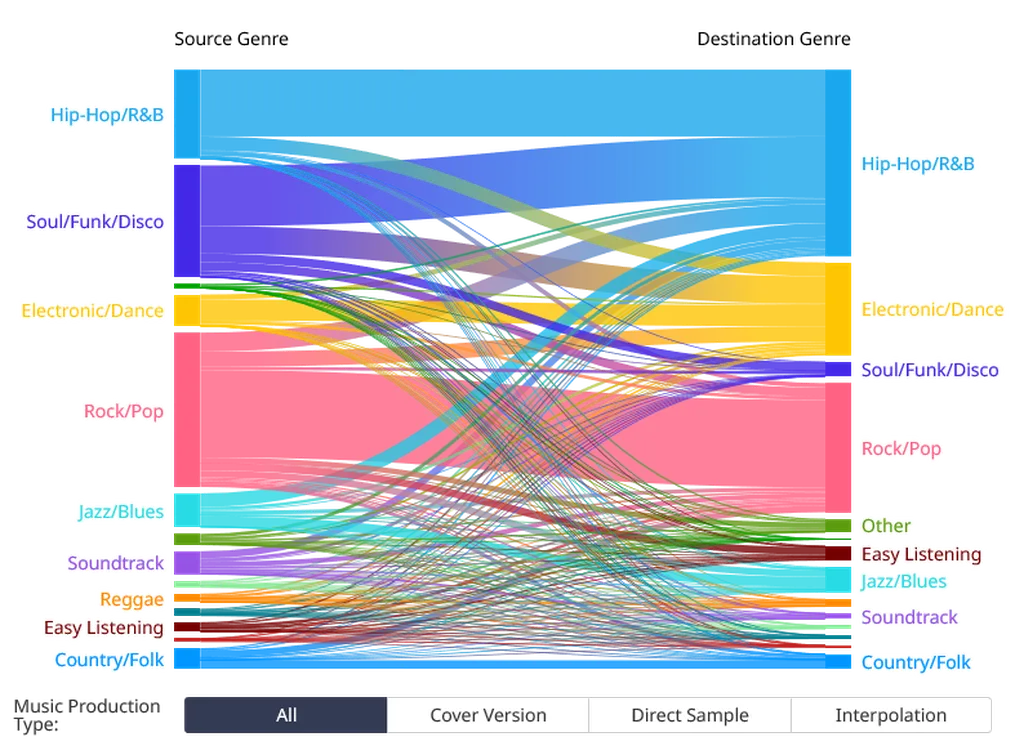
In the ever-evolving landscape of digital music, the sheer volume of available tracks can be overwhelming. As digital audio workstations become more accessible and user-friendly, the quantity of music continues to grow exponentially. This proliferation brings with it a challenge: the boundaries between music genres are becoming increasingly blurred. Albums today often defy traditional genre classifications, blending diverse influences and creating eclectic sounds that don’t fit neatly into any single category. This complexity poses a significant hurdle for music genre recognition systems, which must adapt to accurately categorize these nuanced and multifaceted works.
Researchers Bartosz Karpiński and Cyryl Leszczyński have tackled this challenge head-on. In their recent study, they explore various preprocessing methods and model training approaches to enhance the accuracy of music genre recognition. Their work is particularly noteworthy because it accounts for the eclectic nature of contemporary music. To achieve this, they utilized a custom, manually labeled dataset comprising over 18,000 entries. This extensive dataset provided a robust foundation for their experiments, allowing them to rigorously test and compare different methodologies.
One of the key aspects of their research involves the use of spectrograms, a visual representation of the spectrum of frequencies in a sound signal as they vary with time. Spectrograms are a powerful tool in audio analysis, offering insights into the frequency content and temporal evolution of musical pieces. However, the way these spectrograms are scaled can significantly impact the performance of genre recognition models. Karpiński and Leszczyński investigated multiple spectrogram scaling techniques to determine which methods yield the best results.
The researchers also delved into various model training approaches. Machine learning models, particularly those based on deep learning, have shown great promise in audio classification tasks. By experimenting with different architectures and training strategies, Karpiński and Leszczyński aimed to identify the most effective configurations for recognizing music genres. Their findings could pave the way for more accurate and reliable genre classification systems, benefiting both music enthusiasts and industry professionals.
The implications of this research extend beyond mere classification. Accurate genre recognition can enhance music recommendation systems, helping listeners discover new tracks and artists that align with their preferences. It can also assist music producers and labels in categorizing their work, making it more accessible to audiences. Furthermore, understanding the underlying patterns and features that define different genres can provide valuable insights into the creative processes behind music production.
In conclusion, the work of Karpiński and Leszczyński represents a significant step forward in the field of music genre recognition. By addressing the complexities and eclectic nature of modern music, their research offers valuable insights and methodologies that can improve the accuracy and reliability of genre classification systems. As the digital music landscape continues to evolve, such advancements will be crucial in helping listeners navigate the vast and diverse world of music.