In the bustling cities of Toronto and Vancouver, Mandarin Chinese echoes through homes and streets, a testament to its growing influence as a primary non-official language. To better understand this linguistic giant, researcher Shizheng Xu has turned to the widely accessible audio software, Audacity, to conduct a thorough analysis of Mandarin’s phonetic structure. Xu’s work, which combines theoretical knowledge with practical audio analysis, offers valuable insights into the fundamental principles of Mandarin pronunciation.
Mandarin Chinese is known for its tonal nature, where the pitch of a sound can completely change the meaning of a word. Xu’s research begins by outlining these basic principles, providing a solid foundation for the subsequent audio analysis. By using Audacity, a free, open-source software, Xu demonstrates that sophisticated linguistic analysis doesn’t necessarily require expensive, specialized tools. Instead, it can be accomplished with software that is readily available to the general public.
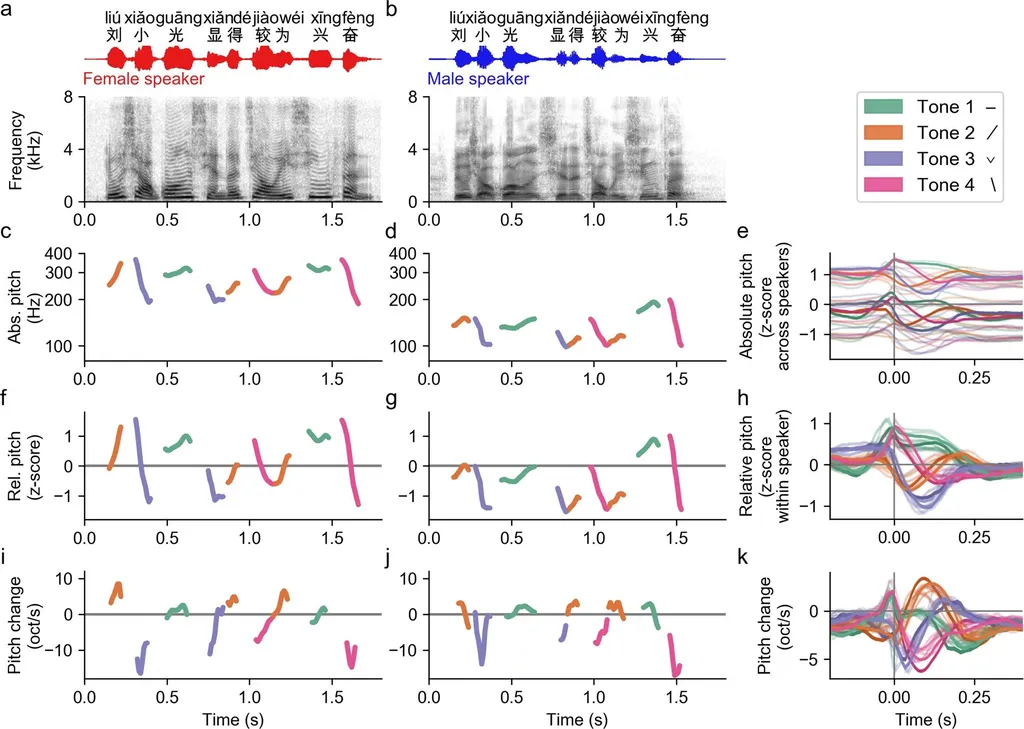
The study delves into the four main tones of Mandarin—high level, rising, falling-rising, and falling—as well as the neutral tone. Xu uses Audacity to visualize these tones, creating spectrograms that display the frequency spectrum of the sound waves over time. These visual representations allow for a clearer understanding of the tonal contours and their distinct characteristics. By analyzing these spectrograms, Xu can pinpoint the subtle differences in pitch and intonation that define each tone, offering a deeper comprehension of Mandarin’s phonetic structure.
One of the practical applications of this research lies in language education. By using Audacity, language learners can visualize the tones of Mandarin, helping them to better understand and replicate the correct pronunciation. This visual feedback can be invaluable for learners who might struggle with the auditory distinctions alone. Furthermore, educators can use these spectrograms to create more effective teaching materials, incorporating visual aids that highlight the tonal contours of Mandarin.
Beyond education, this research also has implications for audio production and speech technology. Understanding the phonetic structure of Mandarin can improve speech recognition systems, making them more accurate and reliable for Mandarin speakers. Additionally, this research can inform the development of text-to-speech technologies, ensuring that synthesized speech accurately reflects the tonal nuances of Mandarin.
In essence, Shizheng Xu’s research serves as a bridge between theoretical linguistics and practical audio analysis. By leveraging the capabilities of Audacity, Xu provides a comprehensive analysis of Mandarin’s phonetic structure that is both accessible and insightful. This work not only advances our understanding of Mandarin Chinese but also demonstrates the potential of widely available audio software in linguistic research and education. As Mandarin continues to grow in global prominence, such studies become increasingly vital, paving the way for better communication, education, and technological development. Read the original research paper here.