
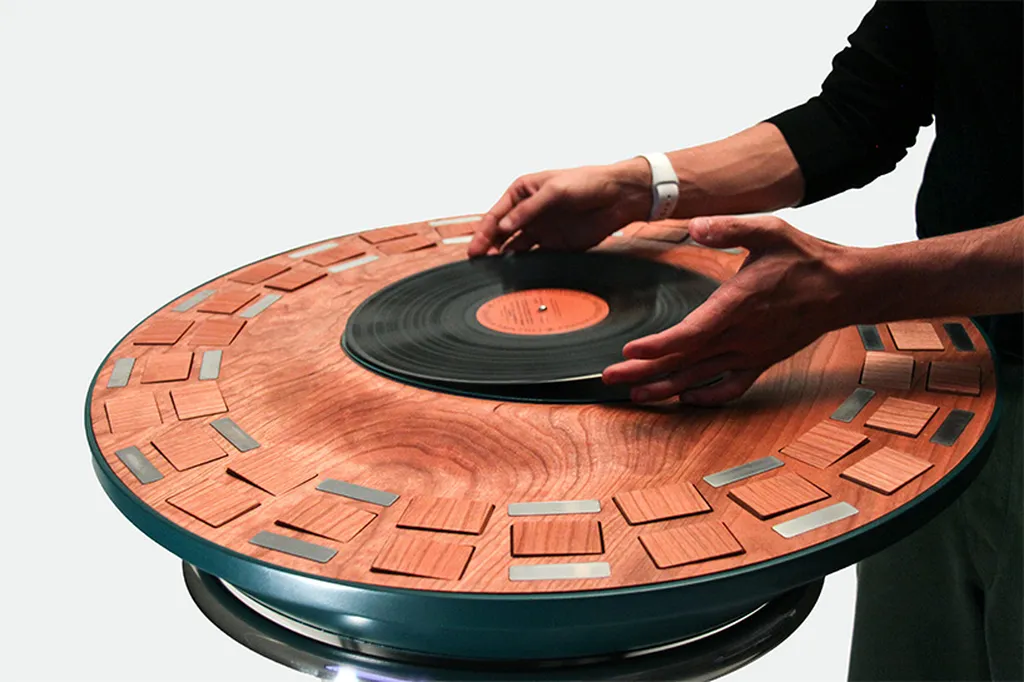
The Orbit kinetic turntable is redefining the way we experience music, blending analog nostalgia with cutting-edge interactive design. This innovative device translates audio vibrations into a physical performance, making soundwaves visible through the movement of handcrafted wooden tiles. Thirty-nine tiles, arranged in concentric circles, react to the subtle shifts in frequency and volume of the music, rising and falling in sync with the rhythm. This dynamic choreography transforms the act of listening into a multisensory experience, bridging the gap between the tangible and the intangible.
The Orbit’s design is a testament to the marriage of craftsmanship and technology. Each wooden tile is meticulously crafted, capturing the warmth and tactility that define analog sound. The circular layout pays homage to the tradition of vinyl playback, while the kinetic motion adds a modern, interactive dimension. As the tiles move in response to the music, they create a visual spectacle that celebrates the relationship between rhythm, form, and touch.
This innovative turntable encourages a renewed awareness of sound as both art and experience. By making music visible, the Orbit invites listeners to engage with their favorite tracks in a new way, fostering a deeper connection to the music. The device’s ability to translate sound into physical movement opens up new possibilities for artistic expression and interactive design.
The introduction of the Orbit kinetic turntable could shape the development of the audio sector in several ways. Firstly, it highlights the growing demand for immersive and interactive experiences in music consumption. As consumers seek more engaging ways to connect with their favorite artists, companies may invest more in developing products that offer multisensory experiences.
Secondly, the Orbit’s success could inspire other designers and manufacturers to explore the intersection of analog and digital technologies. The turntable’s ability to blend traditional craftsmanship with modern motion technology demonstrates the potential for innovation in this space. This could lead to the development of new products that honor the past while embracing the future.
Lastly, the Orbit’s focus on making music visible could influence the way artists and producers approach their craft. As listeners become more attuned to the visual and tactile aspects of sound, musicians may experiment with new ways of creating and performing music that cater to these senses. This could result in a more holistic approach to music production and consumption, where sound, sight, and touch are all considered integral components of the artistic experience.
In conclusion, the Orbit kinetic turntable is more than just a novel piece of audio equipment. It is a symbol of the evolving relationship between technology, craftsmanship, and the human senses. As the audio sector continues to develop, the Orbit’s innovative approach to music consumption could inspire new trends and shape the future of the industry.

