
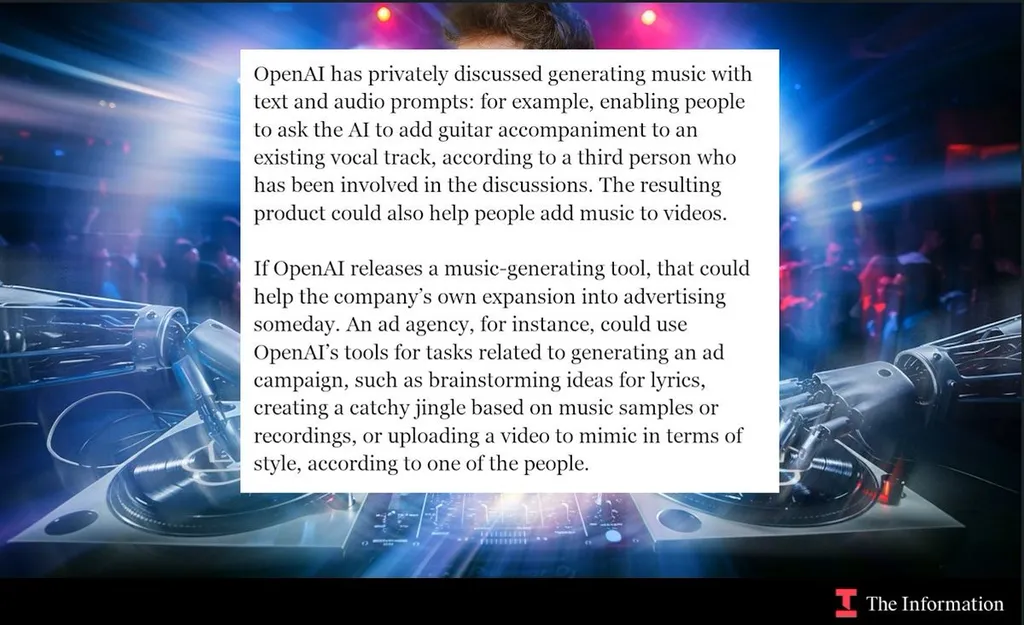
OpenAI is quietly pushing the boundaries of artificial intelligence once again, this time venturing into the realm of music generation. According to a report from The Information, the company is developing a new tool capable of creating music from both text and audio prompts. While the launch date remains unclear, the potential applications of this technology are vast, ranging from generating background scores for videos to providing instrumental accompaniment for vocal tracks.
To bring this innovative tool to life, OpenAI is collaborating with students from the prestigious Juilliard School. These students are assisting in annotating musical scores, a crucial step in providing training data for the generative music model. This collaboration underscores OpenAI’s commitment to leveraging human expertise in the development of its AI tools.
This isn’t OpenAI’s first foray into generative music. The company has previously explored music generation models, but this new tool represents a significant evolution in their capabilities. Notably, OpenAI’s recent work has focused on audio models for text-to-speech and speech-to-text conversions, demonstrating the company’s ongoing efforts to expand the scope of its AI technologies.
The development of this music generation tool comes at a time when several tech giants are exploring similar technologies. Companies like Google and Suno have also made strides in generative music, indicating a growing interest in this field. As OpenAI continues to refine its music generation capabilities, it will be interesting to see how this technology shapes the future of music creation and consumption.
The implications of this development are thought-provoking. If successful, OpenAI’s tool could democratize music creation, making it accessible to anyone with a text or audio prompt. This could revolutionize industries like film, gaming, and advertising, where background music plays a crucial role. Moreover, it could open up new avenues for artists and creators, providing them with innovative tools to express their creativity.
However, the path forward is not without challenges. Ensuring the quality and originality of the generated music will be paramount. Additionally, addressing potential copyright issues and ethical considerations will be crucial as this technology becomes more widespread. As OpenAI navigates these complexities, its work in generative music could set a precedent for the entire tech sector.

