
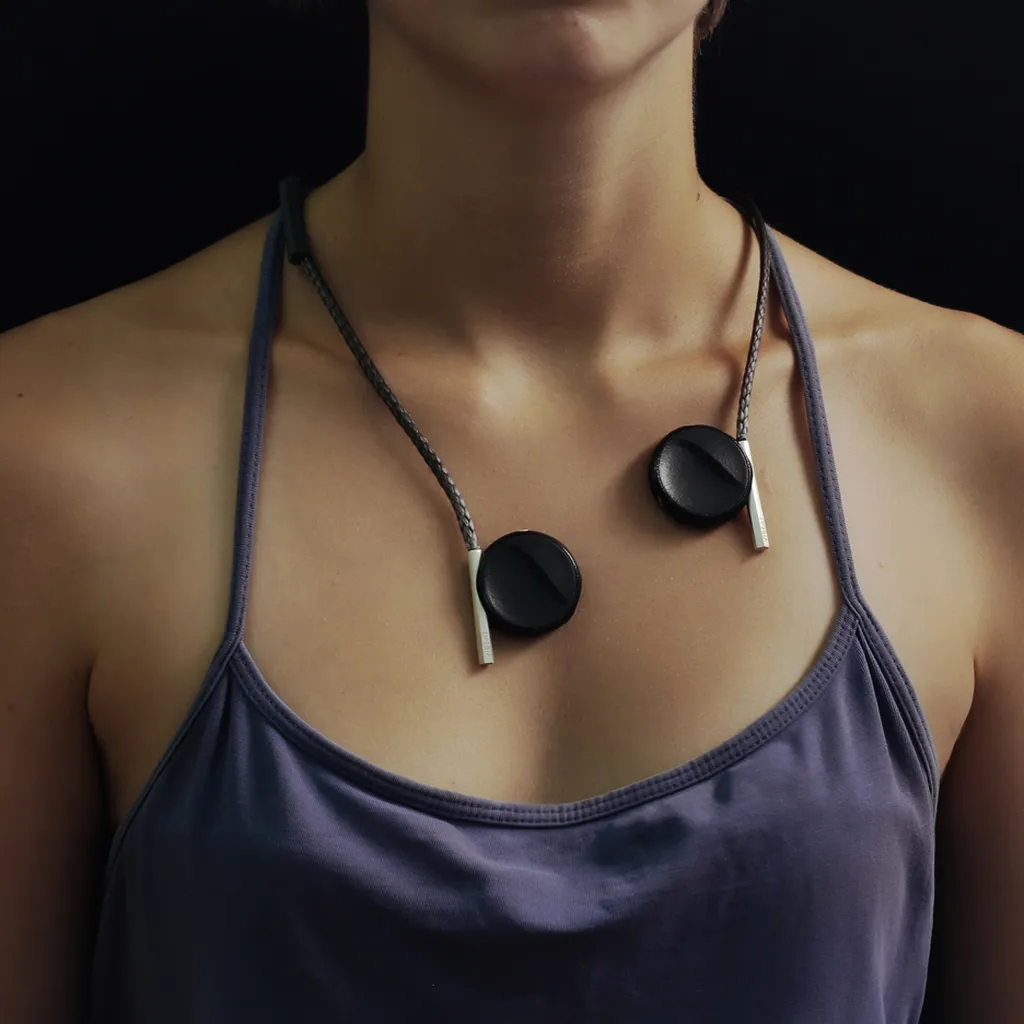
In a groundbreaking stride towards making music accessible to the deaf and hard of hearing community, researchers have introduced MUSTEM, a novel dual-modality system that translates music into a rich, multisensory experience. The system, developed by Paloma Sette, Maria Werneck, William Barbosa, and Ana Loubacker, is designed to address the significant accessibility challenge that the emotional and structural experience of music poses for those who cannot hear.
MUSTEM’s innovative approach comprises two interconnected components. The first is a low-cost, portable hardware prototype that performs real-time audio analysis. This device maps distinct frequency bands—sub-bass, bass, mid-range, and treble—to a four-channel vibrotactile system. This allows users to feel the music’s rhythmic and foundational structure, providing a tangible connection to the auditory experience that hearing individuals take for granted. The second component is a high-fidelity software simulation that overcomes the processing limitations of embedded hardware. This assistive dashboard decodes musical components such as rhythm, harmony, and frequency spectrum into an intuitive and educational visual interface. Together, these components offer a comprehensive framework for sensory substitution, enabling the deaf community to experience music as a structured, substantiated, and emotionally resonant visual and tactile language.
The practical applications of MUSTEM are profound. By providing a means to feel and see music, the system opens up new avenues for the deaf and hard of hearing to engage with musical performances, compositions, and education. Preliminary feedback from seven deaf users indicates that the system’s spatial vibrotactile mapping is perceptible and engaging, suggesting a promising pathway for further development and refinement. The researchers have released all source code and hardware designs as open-source, fostering collaboration and innovation within the accessibility technology community.
This research not only highlights the potential of assistive technologies to bridge sensory gaps but also underscores the importance of inclusive design in the music and audio industry. As technology advances, systems like MUSTEM could pave the way for more immersive and accessible experiences, enriching the lives of individuals who have long been marginalized in the realm of music. The open-source nature of the project invites developers, researchers, and enthusiasts to contribute, potentially accelerating the development of even more sophisticated and inclusive musical experiences.