
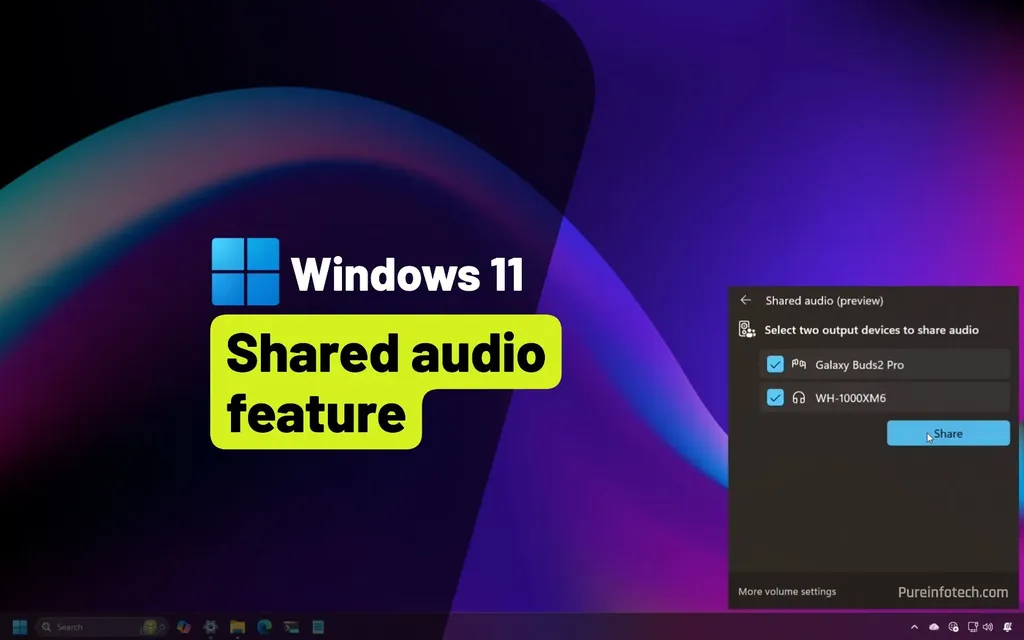
Microsoft’s introduction of the ‘Shared Audio’ feature in Windows 11 marks a significant step forward in wireless audio technology, promising to reshape how users engage with shared audio experiences. By enabling simultaneous audio streaming to two Bluetooth devices, Microsoft is addressing a longstanding inconvenience for users who previously relied on splitters or additional hardware to share audio. This innovation is not just about convenience; it’s about enhancing collaborative experiences, from gaming sessions to group study or shared entertainment.
The feature leverages Bluetooth Low Energy (LE) Audio, a technology that offers several advantages over traditional Bluetooth audio. Improved power efficiency, reduced latency, and better battery life on compatible devices are just a few of the benefits that come with this upgrade. For users, this means a smoother, more synchronized audio experience without the hassle of extra cables or devices.
However, the feature’s current hardware requirements are stringent. Users need a Copilot+-capable PC, such as the Surface laptops or the Surface Pro (Snapdragon X models), and modern audio accessories that support Bluetooth LE Audio. This limitation means that many older devices will not be compatible initially. Microsoft has indicated plans to expand support to more devices once the feature is released to the general public, which is a promising sign for broader accessibility in the future.
For those eager to try out the Shared Audio feature, the process is straightforward. Users can check if their system supports Bluetooth LE Audio by navigating to Settings > Bluetooth & Devices. Enrolling a Copilot+ PC in the Windows Insider Program under the Dev or Beta channel and updating to Build 26220.7051 will grant early access. Once connected, users can enable the Shared Audio shortcut in quick settings to start sharing sound with another device.
The implications of this feature extend beyond mere convenience. It could influence the development of future audio technologies and peripherals, encouraging manufacturers to adopt Bluetooth LE Audio standards more widely. As more devices become compatible, the potential for shared audio experiences could expand significantly, fostering new ways of interacting with technology.
In the broader context, Microsoft’s move highlights the growing importance of seamless, wireless connectivity in modern computing. As users increasingly demand more integrated and efficient solutions, features like Shared Audio are likely to become standard, driving innovation in the tech sector. This development is a testament to how technology can evolve to meet user needs, making everyday tasks more enjoyable and collaborative.
In summary, Microsoft’s Shared Audio feature is a significant advancement that could shape the future of wireless audio technology. By addressing current limitations and paving the way for broader compatibility, Microsoft is setting a new standard for shared audio experiences. As the feature rolls out and gains wider adoption, it will be interesting to see how it influences the development of new audio technologies and peripherals, ultimately enhancing the way users interact with their devices.

