
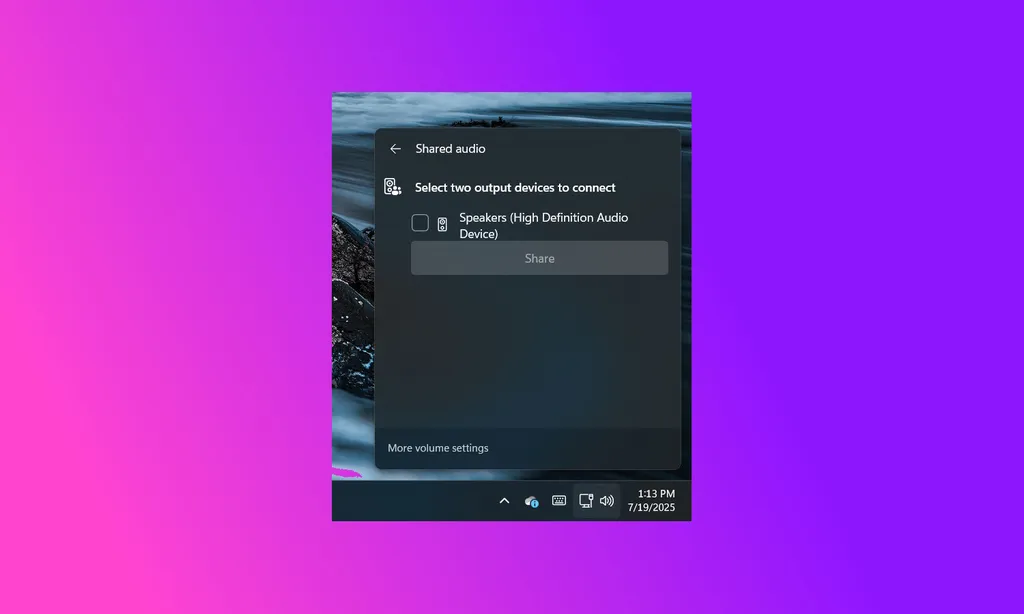
Microsoft is testing a new shared audio feature for Windows 11 that allows users to stream sound to two Bluetooth devices simultaneously. This innovation, powered by the Bluetooth Low Energy (LE) Audio codec, is now available to Insiders in the Dev and Beta channels. The shared audio option enables users to connect two wireless headphones, speakers, earbuds, or even hearing aids to a single PC. This means you can watch a movie with a friend or listen to music together without sharing a single headset. To activate it, users can connect LE Audio-supported devices and select the “Shared audio (preview)” button from the quick settings menu.
Microsoft first introduced LE Audio support in Windows 11 back in August. That update improved wireless audio quality in games, calls, and media playback. Now, the company is expanding its use of the technology to allow dual audio streaming. Other tech giants have also embraced Bluetooth LE Audio. Google uses its Auracast feature to broadcast audio from Android 16 devices to compatible hearing aids. Pixel 8 and newer phones can also connect to two pairs of headphones at once. Similarly, Samsung added Auracast support with the launch of its Galaxy S24 lineup.
Currently, Microsoft’s shared audio feature is limited to select Copilot Plus PCs. Supported devices include the 13.8-inch and 15-inch Surface Laptops and the 13-inch Surface Pro. Microsoft plans to expand availability soon to models like the Samsung Galaxy Book5 360, Galaxy Book5 Pro, and more. However, the feature only works with Bluetooth LE-compatible devices such as the Samsung Galaxy Buds 2 Pro, Buds 3, Buds 3 Pro, and Sony WH-1000XM6 headphones.
This development could significantly shape the future of audio technology in the tech sector. By enabling simultaneous audio streaming to multiple devices, Microsoft is addressing a growing demand for shared experiences in both personal and professional settings. This feature could enhance collaboration in work environments, making it easier for teams to listen to the same audio content without the need for physical proximity. In personal settings, it could revolutionize how people enjoy entertainment, allowing friends and family to share audio experiences more seamlessly.
Moreover, the adoption of Bluetooth LE Audio by multiple tech giants suggests a broader industry shift towards more efficient and versatile audio solutions. As more devices become compatible with LE Audio, the potential for innovative applications will expand. This could lead to new use cases in education, healthcare, and entertainment, where synchronized audio streaming could enhance user experiences.
However, the current limitation to specific devices and PCs highlights the need for broader industry standardization. As more manufacturers adopt LE Audio, the ecosystem will become more robust, benefiting consumers with greater flexibility and choice. Microsoft’s move is a step in this direction, but widespread adoption will require continued collaboration and innovation across the tech sector.
In summary, Microsoft’s shared audio feature for Windows 11 is a significant advancement that could redefine how we experience audio. By enabling dual audio streaming, Microsoft is not only improving user convenience but also paving the way for new applications and use cases. As the tech industry continues to embrace Bluetooth LE Audio, we can expect even more innovative solutions that enhance our daily lives.

