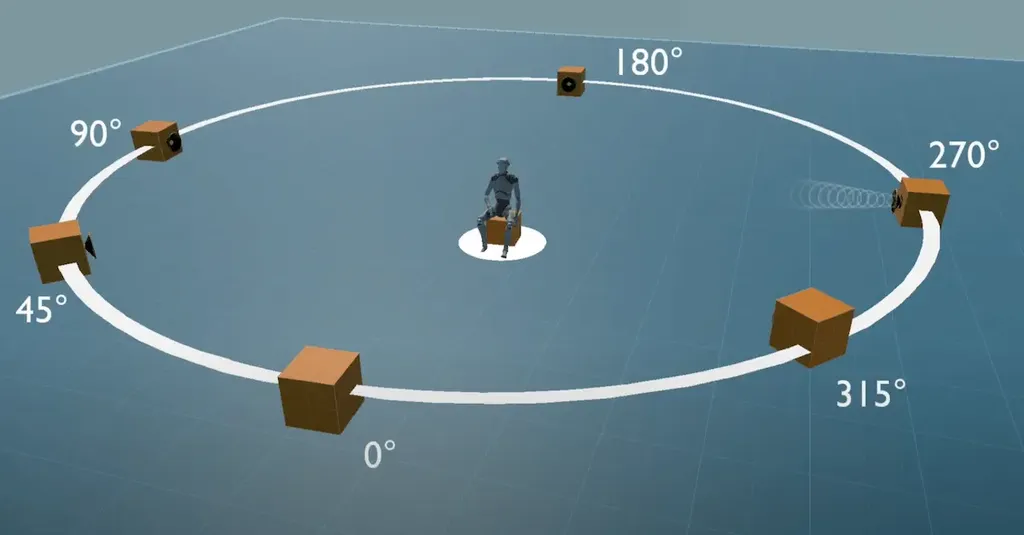

In the rapidly evolving landscape of artificial intelligence, multimodal large language models (MLLMs) have emerged as a focal point of research, showcasing remarkable advancements in scale and capabilities. However, the intelligence, limitations, and risks associated with these models remain inadequately understood. A team of researchers, led by Artem Chervyakov and Alexander Panchenko, has introduced Mera Multi, an open multimodal evaluation framework specifically designed for Russian-language architectures. This benchmark is instruction-based and encompasses default text, image, audio, and video modalities, featuring 18 newly constructed evaluation tasks for both general-purpose models and modality-specific architectures, including image-to-text, video-to-text, and audio-to-text.
The significance of Mera Multi lies in its comprehensive approach to addressing the gaps in the evaluation of MLLMs, particularly in the context of the Russian language, where no multimodal benchmarks currently exist. The researchers have developed a universal taxonomy of multimodal abilities, ensuring that the benchmark is both culturally and linguistically relevant to Russian speakers. This involves creating 18 datasets from scratch, unifying prompts and metrics to provide a consistent evaluation framework. The benchmark also includes baseline results for both closed-source and open-source models, offering a comparative analysis that can guide future research and development.
One of the standout contributions of Mera Multi is its methodology for preventing benchmark leakage, which includes watermarking and licenses for private sets. This ensures the integrity and reliability of the evaluation process, allowing researchers to confidently assess the performance of various models without the risk of data contamination. While the initial focus of Mera Multi is on the Russian language, the proposed benchmark provides a replicable methodology for constructing multimodal benchmarks in typologically diverse languages, particularly within the Slavic language family.
The implications of this research are far-reaching, particularly for the music and audio industry. As MLLMs become more sophisticated, their applications in audio and music production, analysis, and recommendation systems are expected to grow. The ability to accurately evaluate these models in a multimodal context can lead to significant advancements in how music is created, distributed, and experienced. For instance, models that can effectively process and generate audio and video content can revolutionize music production by automating certain aspects of the creative process, enhancing collaboration between artists and AI, and providing new tools for sound design and composition.
Moreover, the development of language-specific benchmarks like Mera Multi can pave the way for more inclusive and culturally relevant AI applications. By ensuring that models are evaluated in the context of specific languages and cultures, researchers can develop AI systems that are more attuned to the nuances and specificities of different linguistic and cultural contexts. This can lead to more personalized and engaging user experiences in music and audio applications, ultimately enriching the way we interact with and enjoy music.
In conclusion, the introduction of Mera Multi represents a significant step forward in the evaluation of multimodal large language models, particularly in the context of the Russian language. By providing a comprehensive and culturally relevant benchmark, the researchers have not only advanced our understanding of MLLMs but also opened up new possibilities for their application in the music and audio industry. As the field continues to evolve, the insights and methodologies offered by Mera Multi will be invaluable in shaping the future of AI-driven music and audio technologies.