
The landscape of healthcare technology is evolving rapidly, and recent advancements in large language models (LLMs) are paving the way for innovative solutions that prioritize patient privacy and data security. A groundbreaking study introduces MedChat, a locally deployable virtual physician framework designed to streamline clinical anamnesis—the process of gathering a patient’s medical history. This system integrates an LLM-based medical chatbot with a diffusion-driven avatar, creating a seamless and interactive experience for both patients and healthcare providers.
MedChat stands out because it can be deployed on-site, addressing critical concerns around data protection and patient privacy. Traditional cloud-based AI systems often raise eyebrows due to potential data breaches and compliance issues. By operating locally, MedChat ensures that sensitive patient information remains isolated from external networks, thereby mitigating these risks. This approach is particularly significant in regions with stringent data protection regulations, where the secure handling of medical data is non-negotiable.
The development team, comprising Jan Benedikt Ruhland, Doguhan Bahcivan, Jan-Peter Sowa, Ali Canbay, and Dominik Heider, fine-tuned the chatbot using a hybrid corpus of real and synthetically generated medical dialogues. This diverse dataset enhances the chatbot’s ability to understand and respond accurately to a wide range of medical inquiries. Additionally, the researchers optimized model efficiency through Low-Rank Adaptation, a technique that reduces computational demands without compromising performance. This optimization is crucial for practical deployment in clinical settings, where resources may be limited.
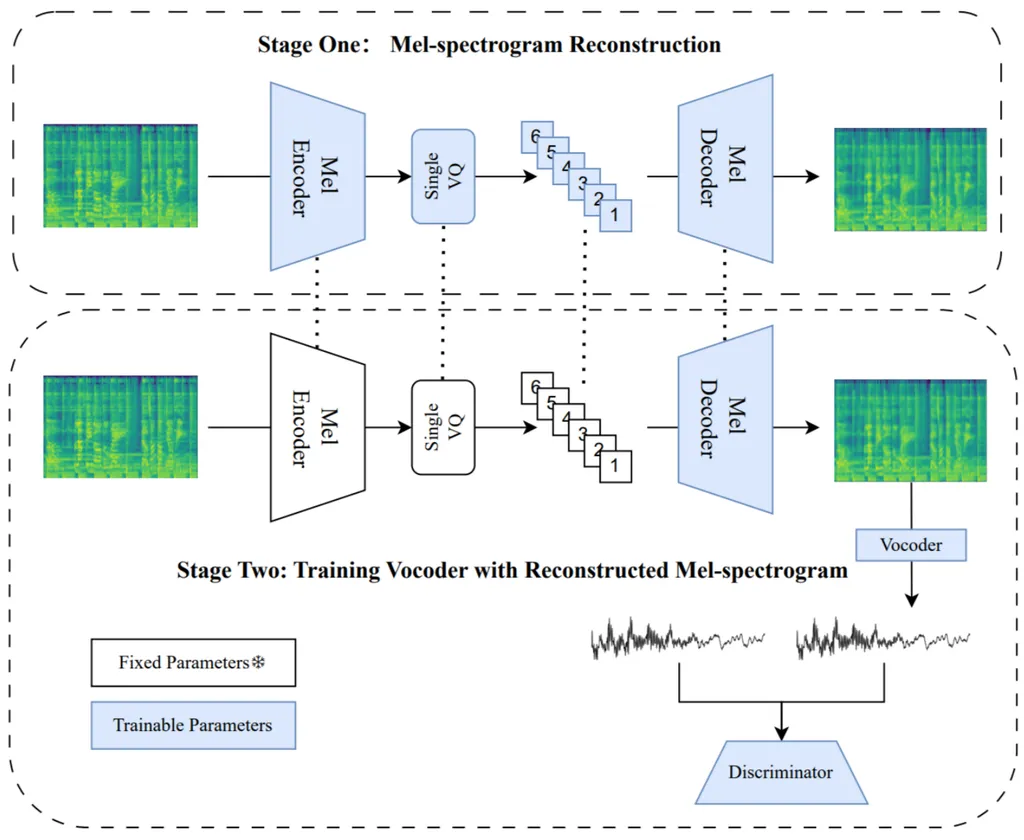
A key feature of MedChat is its secure and isolated database interface, which ensures a complete separation between patient data and the inference process. This design choice underscores the system’s commitment to privacy and security, providing healthcare providers with a reliable tool that complies with ethical and regulatory standards. The avatar component of MedChat, realized through a conditional diffusion model operating in latent space, adds a human touch to the interaction. Trained on researcher video datasets and synchronized with mel-frequency audio features, the avatar delivers realistic speech and facial animations, making the interaction more engaging and intuitive.
Unlike existing cloud-based systems, MedChat demonstrates the feasibility of a fully offline, locally deployable LLM-diffusion framework for clinical anamnesis. The autoencoder and diffusion networks exhibited smooth convergence, and the system achieved stable fine-tuning with strong generalization to unseen data. This robustness makes MedChat a versatile tool that can adapt to various clinical environments, from high-end hospitals to low-cost settings.
The implications of this research are far-reaching. By providing a privacy-preserving, resource-efficient foundation for AI-assisted clinical anamnesis, MedChat has the potential to revolutionize patient care. It offers a scalable solution that can be tailored to different healthcare settings, ensuring that even resource-constrained environments can benefit from advanced AI technologies. As we move forward, the integration of such systems into clinical practice could enhance the efficiency and accuracy of medical diagnoses, ultimately leading to better patient outcomes.
In summary, MedChat represents a significant leap forward in the field of healthcare technology. Its locally deployable framework, combined with robust privacy measures and advanced conversational capabilities, sets a new standard for AI-assisted medical interactions. As researchers continue to refine and expand these technologies, we can expect to see even more innovative applications that prioritize patient care and data security.