In the realm of applied mathematics and wave physics, the concept of invisibility has long captivated researchers. Lucas Chesnel, a prominent researcher in this field, has been delving into the intriguing problem of achieving invisibility in waveguides. This research is not just a theoretical exercise but has practical implications for various fields, including acoustics and materials science.
Chesnel’s work focuses on the propagation of acoustic waves in waveguides that are unbounded in one direction. When an incident field encounters an obstacle in such a structure, it typically results in reflection and transmission, characterized by scattering coefficients. The primary goal of Chesnel’s research is to manipulate these scattering coefficients by adjusting the geometry, frequency, or material properties of the waveguide. By doing so, it is possible to control the visibility of obstacles within the waveguide, effectively rendering them invisible to incoming acoustic waves.
One of the key techniques Chesnel employs is a continuation method based on shape derivatives. This method involves incrementally altering the shape of the obstacle to minimize its scattering coefficients. By systematically adjusting the shape, researchers can construct obstacles that are effectively invisible to acoustic waves. This approach leverages the mathematical concept of shape derivatives, which provide a way to quantify how changes in the shape of an object affect its interaction with waves.
Another innovative technique explored by Chesnel involves the use of complex resonances located near the real axis. These resonances can be exploited to hide obstacles within the waveguide. When an obstacle is designed to resonate at specific frequencies, it can absorb or scatter incoming waves in such a way that it becomes undetectable. This method relies on the intricate relationship between the frequency of the incoming waves and the resonant properties of the obstacle.
Furthermore, Chesnel’s research includes the construction of a non-self-adjoint operator whose eigenvalues correspond to frequencies at which incident fields are completely transmitted through the waveguide. This means that at these specific frequencies, the energy of the incoming waves passes through the obstacle without any reflection, effectively making the obstacle invisible. This approach utilizes advanced spectral theory, which studies the eigenvalues and eigenfunctions of operators, to achieve the desired invisibility effect.
The practical applications of Chesnel’s research are vast. In the field of acoustics, the ability to control the visibility of obstacles could lead to the development of advanced noise-cancellation technologies and acoustic cloaking devices. In materials science, these techniques could be used to design materials with tailored acoustic properties, enabling the creation of structures that can manipulate sound waves in novel ways.
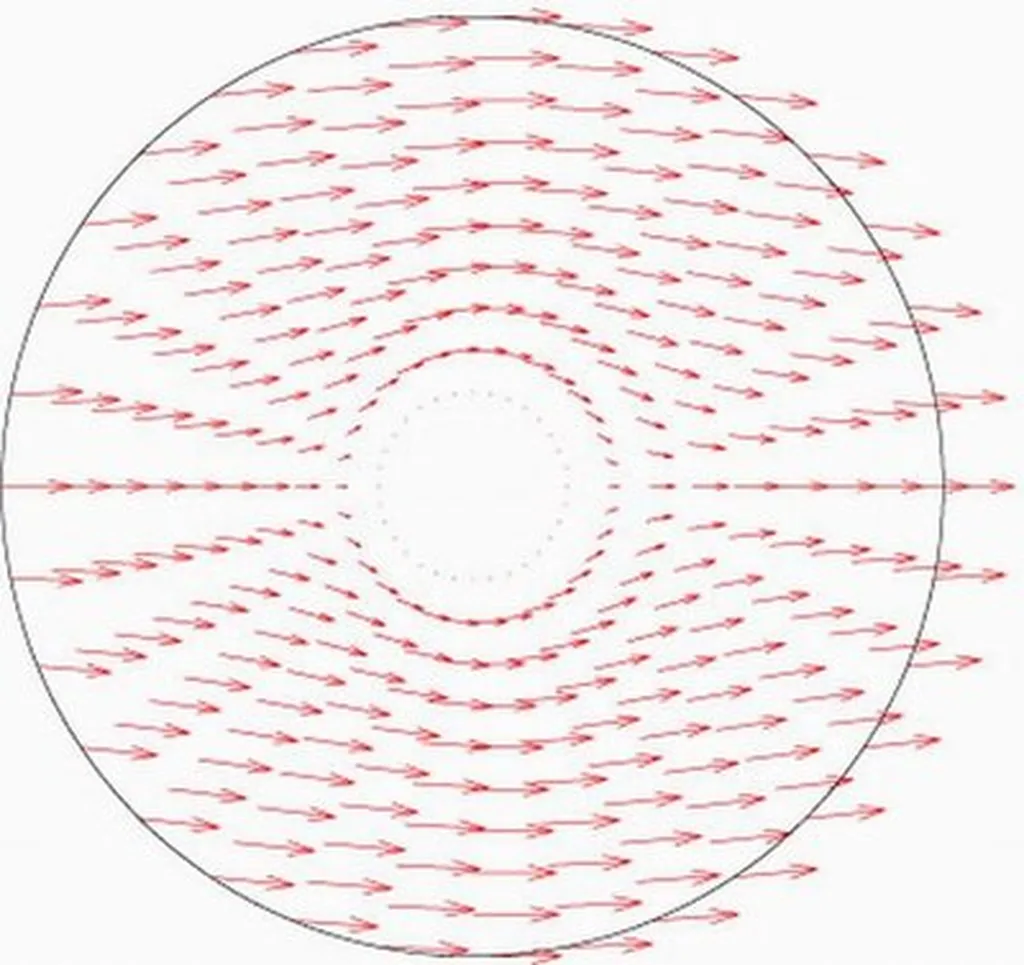
Chesnel’s work is supported by a robust framework of mathematical tools, including asymptotic analysis and spectral theory for both self-adjoint and non-self-adjoint operators. These tools provide the necessary theoretical foundation to understand and manipulate the behavior of waves in complex structures. To validate the theoretical findings, Chesnel’s research is complemented by numerical experiments, which offer visual and quantitative evidence of the effectiveness of the proposed techniques.
In conclusion, Lucas Chesnel’s research on achieving invisibility in waveguides represents a significant advancement in the field of applied mathematics and wave physics. By leveraging shape derivatives, complex resonances, and non-self-adjoint operators, Chesnel has developed innovative techniques to control the visibility of obstacles in waveguides. The practical implications of this research are far-reaching, with potential applications in acoustics, materials science, and beyond. As the field continues to evolve, Chesnel’s work serves as a testament to the power of mathematical theory in solving real-world problems.