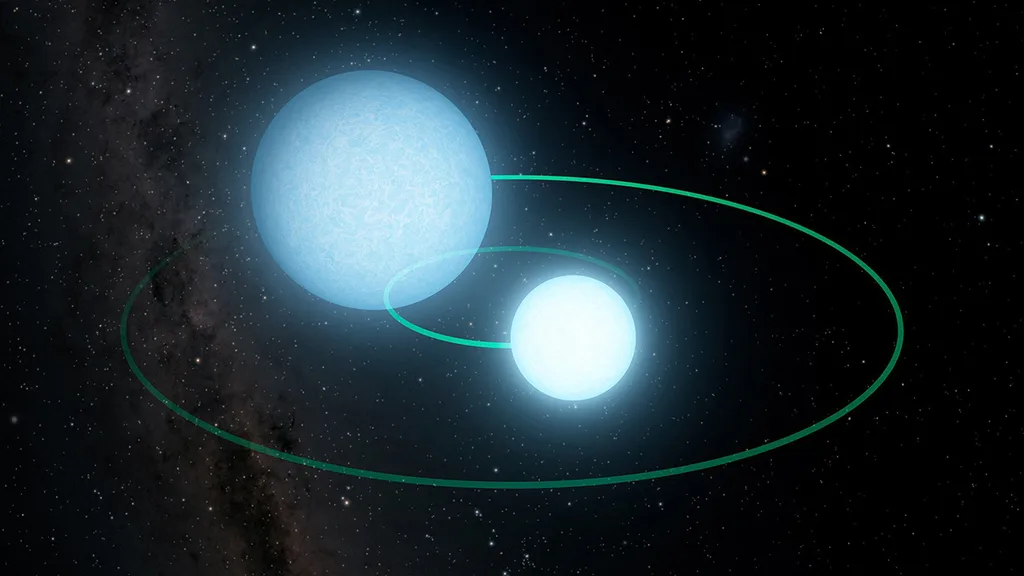
In a groundbreaking study, Shinjirou Kouzuma has introduced a novel method for estimating the fill-out factor of overcontact binary systems using the derivatives of light curves. This innovative approach leverages the intricate details of light curve data to provide insights into the physical characteristics of these complex stellar systems. Overcontact binaries are a type of binary star system where the two stars are so close that they share an envelope of material, making their study crucial for understanding stellar evolution and interactions.
Kouzuma’s research involved synthesizing 74,431 sample light curves, meticulously covering the typical parameter space of overcontact binaries. This extensive dataset allowed for a comprehensive analysis of the light curve derivatives up to the fourth order. Building on a recent classification scheme proposed by another study, Kouzuma classified the sample light curves into different types based on their derivative properties. Among these classifications, the SPf type, characterized by high mass ratios and high inclinations, stood out due to a strong correlation between the fill-out factor and the time interval between two local extrema in the third derivatives of their light curves.
The fill-out factor, a critical parameter in the study of overcontact binaries, indicates how much of the potential Roche lobe is filled by the stars. By identifying this correlation, Kouzuma derived an empirical formula through regression analysis, enabling the estimation of the fill-out factor with greater accuracy. This method was subsequently tested on real overcontact binary data, demonstrating its practicality and reliability in obtaining estimates of the fill-out factor and its associated uncertainties.
The implications of this research are profound for the field of astrophysics. By providing a more precise and efficient way to estimate the fill-out factor, Kouzuma’s method enhances our ability to study the dynamics and evolution of overcontact binary systems. This, in turn, contributes to a deeper understanding of stellar interactions and the processes driving the evolution of binary stars. As researchers continue to refine and apply this technique, it is poised to become an invaluable tool in the ongoing exploration of the cosmos.