In the ever-evolving landscape of music technology, researchers are continually pushing the boundaries of what’s possible, and a recent study by Xinyu Li is no exception. Li has developed HouseX, a fine-grained house music dataset that promises to bring a new level of precision to music genre classification. This dataset is a significant step forward, as it addresses a notable gap in existing music genre datasets, which often lack detailed sub-genre labels.
HouseX focuses on house music, a genre known for its diversity and complexity. Li’s dataset provides four specific sub-genre labels: future house, bass house, progressive house, and melodic house. This level of granularity is crucial for understanding the nuances of house music and can greatly enhance the accuracy of music classification tasks. The dataset’s annotations effectively highlight the unique characteristics of each sub-genre, making it a valuable resource for researchers and developers in the field.
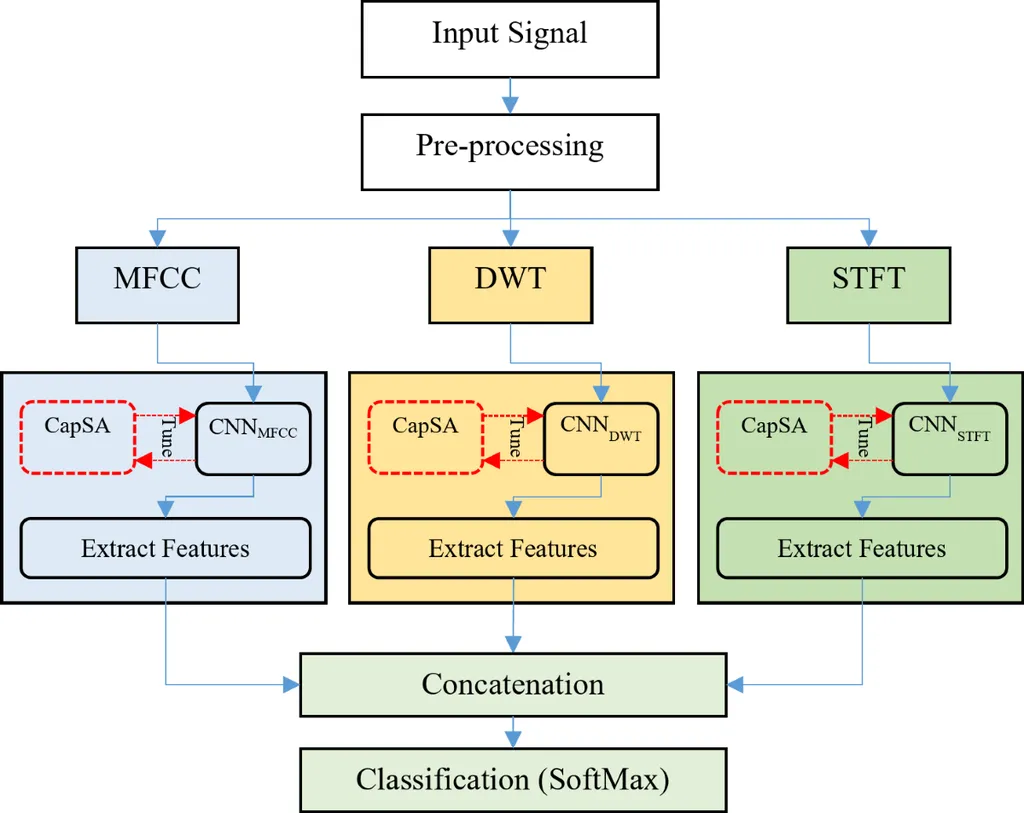
To demonstrate the practical applications of HouseX, Li has built baseline models that classify sub-genres based on the mel-spectrograms of a track. Mel-spectrograms are visual representations of the spectrum of frequencies in a sound signal, and they are widely used in audio processing and music information retrieval. The models achieved strongly competitive results, indicating the dataset’s potential for real-world applications.
One of the most exciting aspects of this research is the potential for innovative applications in the music industry. Li has proposed several scenarios where HouseX could be utilized, including automated music curation, personalized music recommendations, and even interactive music experiences. To illustrate this, Li created a simulated sci-fi tunnel demo built and rendered in a 3D modeling software. In this demo, the colors of the lights are automated by the output of the classification model, creating an immersive, music-driven visual experience.
The implications of HouseX extend beyond just house music. The approach demonstrated in this research could be applied to other genres, leading to more detailed and accurate music classification systems. This could revolutionize the way we discover, recommend, and interact with music, making the experience more personalized and engaging than ever before. As the field of music technology continues to evolve, datasets like HouseX will play a crucial role in driving innovation and shaping the future of the industry.