
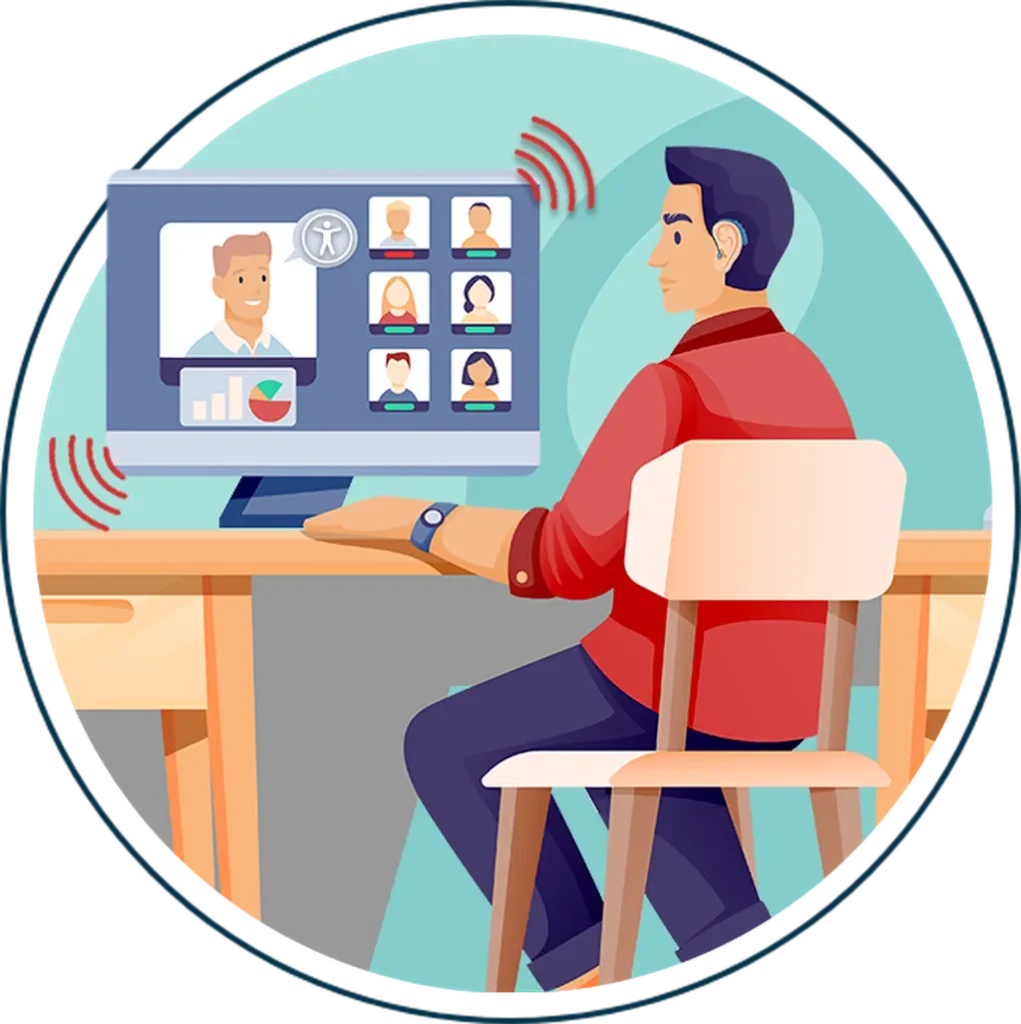
In a groundbreaking advancement for assistive technology, researchers have introduced HI-TransPA, an innovative instruction-driven audio-visual personal assistant designed to bridge communication barriers for hearing-impaired individuals. This cutting-edge model leverages the Omni-Model paradigm, integrating indistinct speech with lip dynamics to facilitate both translation and dialogue within a unified multimodal framework. The development addresses the unique pronunciation patterns of hearing-impaired speech and the limitations of existing models through a sophisticated multimodal preprocessing and curation pipeline. This pipeline detects facial landmarks, stabilizes the lip region, and evaluates sample quality, using these metrics to guide a curriculum learning strategy that progressively enhances model robustness.
The researchers employed a novel unified 3D-Resampler to efficiently encode lip dynamics, a critical component for accurate interpretation. This architectural innovation, combined with a purpose-built HI-Dialogue dataset, enabled HI-TransPA to achieve state-of-the-art performance in both literal accuracy and semantic fidelity. The model’s ability to seamlessly fuse audio and visual inputs represents a significant leap forward in assistive communication technology, offering a robust end-to-end modeling framework and essential processing tools for future research.
The implications of HI-TransPA extend beyond mere technological innovation. For hearing-impaired individuals, this tool promises to transform daily communication, reducing the barriers that often hinder clear speech production. By integrating advanced multimodal processing, HI-TransPA not only enhances the clarity of communication but also ensures that the nuances of dialogue are preserved. This research establishes a foundation for applying Omni-Models in assistive technologies, paving the way for more inclusive and accessible communication solutions. As the technology continues to evolve, it holds the potential to redefine the landscape of assistive devices, making them more adaptive, intuitive, and effective for users worldwide.