
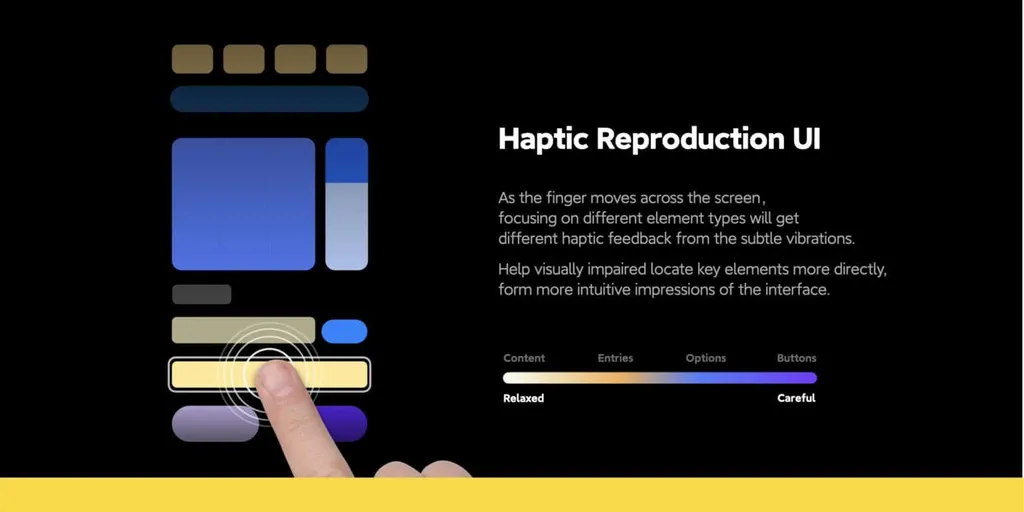
In the realm of educational technology, a groundbreaking innovation is making waves, particularly for visually impaired students. Pratham Gandhi, a researcher dedicated to accessible education, has introduced the Haptic-Audio Code Interface (HACI). This tool is designed to revolutionize programming education for visually impaired (VI) students by integrating haptic and audio feedback, thereby compensating for the absence of visual cues.
HACI is a non-resource-intensive web application that supports JavaScript program development, execution, and debugging. It connects via a cable to an Arduino-powered glove equipped with six integrated haptic motors. These motors provide physical feedback to VI programmers, enhancing their ability to navigate and comprehend code. The primary goal of HACI is to improve non-visual code navigation, comprehension, summarizing, editing, and debugging while minimizing cognitive load. This innovative approach aims to provide equitable educational opportunities in computer science, a field where visual impairments can often pose significant barriers.
The design and technical implementation of HACI are rooted in the principles of accessibility and usability. The preliminary evaluation of HACI involved a pilot study with undergraduate Computer Science students. The findings indicate that HACI significantly aids in non-visual navigation and understanding of programming constructs. However, challenges remain in refining the feedback mechanisms to ensure consistency and reliability. Additionally, there is a need to expand the current functionality to offer a more feature-rich and customizable learning experience. This enhancement will allow visually impaired students to fully utilize interleaved haptic and audio feedback, thereby improving their programming skills and educational outcomes.
The study underscores the transformative potential of haptic and audio feedback in educational practices for the visually impaired. By integrating tactile and auditory feedback into educational tools, HACI sets a foundation for future research and development in accessible programming education. This work contributes significantly to the field of accessible technology, demonstrating how innovative solutions can broaden accessibility in STEM education. As we move forward, the insights gained from HACI’s development and evaluation will pave the way for more inclusive and effective educational tools, ensuring that visually impaired students can thrive in the world of programming and beyond.