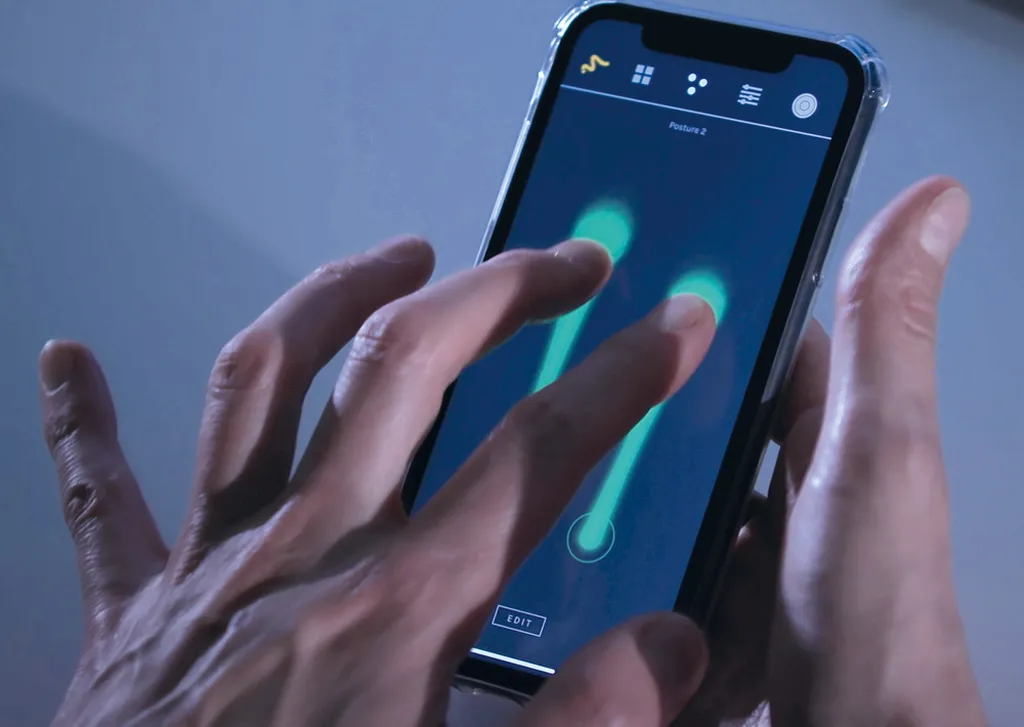
In a groundbreaking development that bridges the gap between human movement and digital soundscapes, researchers have introduced a real-time, gesture-based control framework that dynamically adapts audio and music based on live human movement. This innovative system, developed by Mahya Khazaei, Ali Bahrani, and George Tzanetakis, creates a responsive connection between visual and auditory stimuli, enabling dancers, performers, and even casual users to influence music through their movements.
The framework leverages computer vision and machine learning techniques to track and interpret motion, allowing users to manipulate various audio elements such as tempo, pitch, effects, and playback sequence. By analyzing live video input, the system can dynamically adjust music in real-time, offering an immersive experience where users can shape the music as they move. This human-in-the-loop approach ensures that the interaction is intuitive and responsive, with the machine learning model continuously adapting to the user’s gestures.
One of the standout features of this framework is its ability to achieve user-independent functionality with minimal training. With as few as 50 to 80 samples, the system can label simple gestures, making it accessible and adaptable for a wide range of users. This low sample requirement is a significant advancement, as it reduces the barrier to entry for both performers and developers looking to integrate gesture control into their projects.
The practical applications of this technology are vast and varied. For live performances, dancers and musicians can now create a symbiotic relationship with the music, where their movements directly influence the auditory experience. Interactive installations can become more engaging, with users able to manipulate soundscapes through natural gestures. Even in personal use, individuals can explore new ways to interact with music, turning their movements into a form of creative expression.
The framework combines gesture training, cue mapping, and audio manipulation to create a seamless interplay between human interaction and machine response. Gestures are interpreted as input signals, mapped to sound control commands, and used to naturally adjust music elements. This dynamic interaction not only enhances the user experience but also opens up new avenues for artistic expression and creative exploration.
As the technology continues to evolve, the potential for gesture-based control in music and audio production is immense. From enhancing live performances to revolutionizing interactive media, this framework paves the way for a future where the boundary between human movement and digital sound becomes increasingly blurred. With ongoing advancements in machine learning and computer vision, the possibilities for real-time, gesture-based control are limited only by the imagination. Read the original research paper here.