In the rapidly evolving landscape of artificial intelligence-generated content (AIGC), the intersection of video and audio technologies has become a fertile ground for innovation. A recent breakthrough in this domain comes from researchers Lei Zhao, Rujin Chen, Chi Zhang, Xiao-Lei Zhang, and Xuelong Li, who have introduced FoleySpace, a pioneering framework designed to generate binaural spatial audio from video content. This advancement addresses a critical gap in the current research, which has predominantly focused on mono audio generation, often lacking the spatial perception necessary for an immersive experience.
FoleySpace stands out by leveraging visual information to produce immersive and spatially consistent stereo sound. The framework employs a sophisticated sound source estimation method to pinpoint the 2D coordinates and depth of sound sources within each video frame. This data is then converted into a 3D trajectory using a coordinate mapping mechanism. The 3D trajectory, combined with monaural audio generated by a pre-trained video-to-audio (V2A) model, serves as the conditioning input for a diffusion model. This model is tasked with generating spatially consistent binaural audio, thereby enhancing the overall immersive quality of the audio-visual experience.
To support the dynamic generation of sound fields, the researchers constructed a training dataset based on recorded Head-Related Impulse Responses (HRIRs). This dataset encompasses a variety of sound source movement scenarios, providing a robust foundation for the generation of realistic and immersive audio environments. The experimental results demonstrate that FoleySpace outperforms existing approaches in terms of spatial perception consistency, marking a significant leap forward in the field of audio generation.
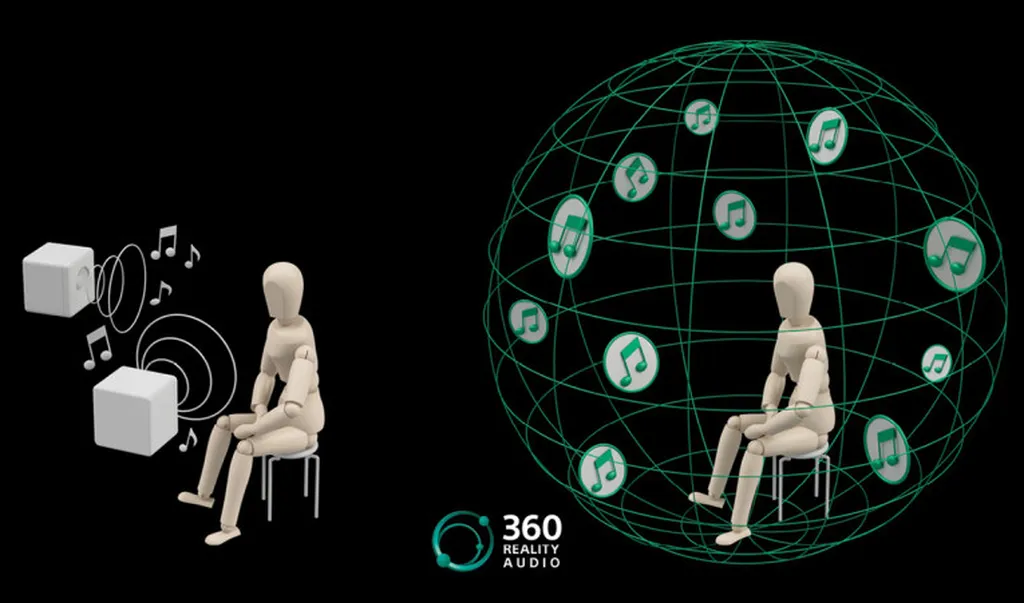
The implications of this research are profound for the music and audio production industries. Binaural spatial audio has the potential to revolutionize the way we experience sound, offering a level of immersion that mono audio simply cannot match. For music producers, this technology could open up new avenues for creating three-dimensional soundscapes that transport listeners into the heart of the music. In film and gaming, the ability to generate spatially consistent audio from visual content could enhance storytelling and user engagement, providing a more realistic and captivating experience.
Moreover, the practical applications of FoleySpace extend beyond entertainment. In virtual reality (VR) and augmented reality (AR), where immersive audio is crucial for creating believable environments, this technology could play a pivotal role. By generating binaural audio that accurately reflects the movement and positioning of sound sources, FoleySpace could significantly enhance the sense of presence in virtual worlds.
In conclusion, the introduction of FoleySpace represents a significant advancement in the field of audio generation. By addressing the limitations of mono audio and focusing on the creation of spatially consistent binaural sound, the researchers have opened up new possibilities for immersive audio experiences. As this technology continues to develop, it has the potential to transform the way we produce and consume audio content, offering unprecedented levels of immersion and engagement.