
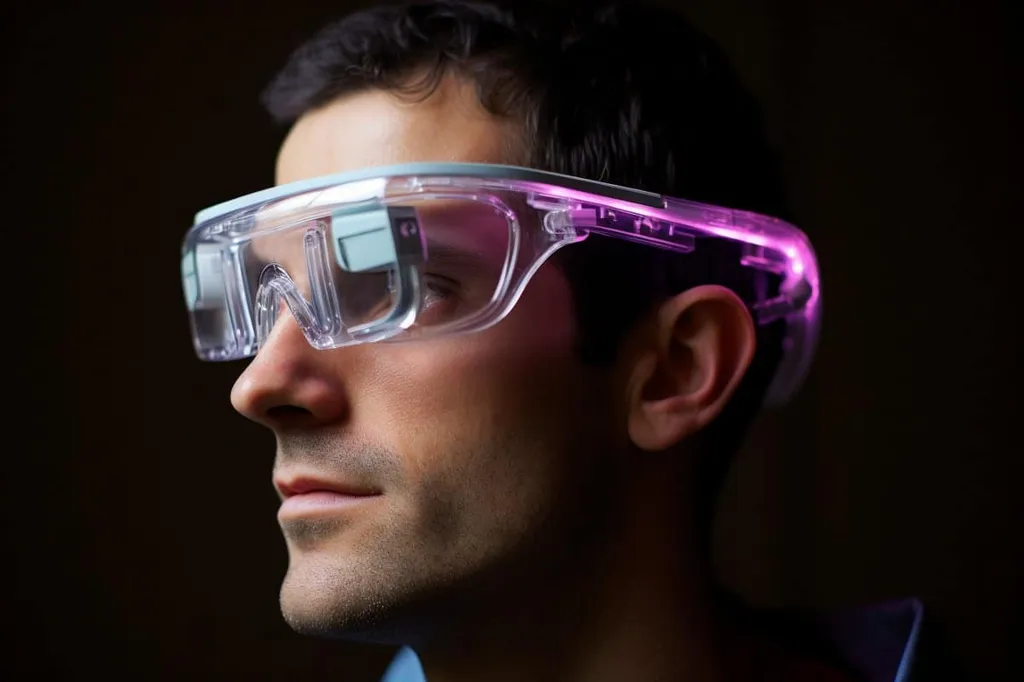
In the ever-evolving landscape of wearable technology, researchers are continually pushing the boundaries of what smart glasses can achieve. A recent study, led by Akshay Paruchuri and colleagues, introduces EgoTrigger, an innovative approach designed to enhance human memory through audio-driven image capture. The goal is to create energy-efficient smart glasses capable of all-day use, a significant challenge given the power demands of continuous sensing and multi-modal AI agents.
EgoTrigger leverages audio cues from the microphone to selectively activate the camera, a strategy that significantly reduces energy consumption. The system uses a lightweight audio model called YAMNet, coupled with a custom classification head, to identify hand-object interaction (HOI) sounds—such as the opening of a drawer or a medication bottle. These audio triggers prompt the camera to capture images, preserving moments critical for contextual understanding and memory enhancement. The researchers evaluated EgoTrigger on the QA-Ego4D dataset and introduced a new dataset, the Human Memory Enhancement Question-Answer (HME-QA) dataset, which contains 340 human-annotated first-person question-answer pairs from full-length Ego4D videos. This dataset focuses on HOI moments, ensuring that the captured images are relevant to the user’s daily activities and memory recall.
The results of the study are promising. EgoTrigger demonstrated a 54% reduction in the number of frames captured on average, which translates to substantial energy savings in both power-hungry sensing components like cameras and downstream operations such as wireless transmission. Despite this reduction, the system achieved comparable performance on episodic memory tasks. This balance of efficiency and functionality opens up a range of practical applications for music and audio production. For instance, musicians and sound engineers could use EgoTrigger to capture audio-driven visuals that correspond to specific sounds or instruments, enhancing the creative process. Additionally, the technology could be integrated into smart glasses for live performances, allowing artists to capture and review moments of inspiration or critical sound cues in real-time.
Beyond the realm of music, EgoTrigger’s potential extends to everyday life. The system could help users recall where they placed their keys or remind them of routine activities, such as taking medications. This context-aware triggering strategy represents a significant step forward in the development of energy-efficient, functional smart glasses capable of all-day use. As wearable technology continues to evolve, EgoTrigger’s approach could pave the way for more intuitive and efficient human-machine interactions, enriching both professional and personal experiences. Read the original research paper here.