
In the realm of audio technology, the challenge of acoustic echo cancellation (AEC) has long been a formidable obstacle, particularly in real-world settings where low-cost loudspeakers and complex room acoustics introduce nonlinear distortions. Traditional methods often struggle to effectively cancel out echoes in such environments, leading to suboptimal audio quality. However, a groundbreaking approach developed by researchers Fei Zhao and Zhong-Qiu Wang promises to revolutionize AEC by introducing a dual-microphone configuration that could redefine how we handle echo cancellation.
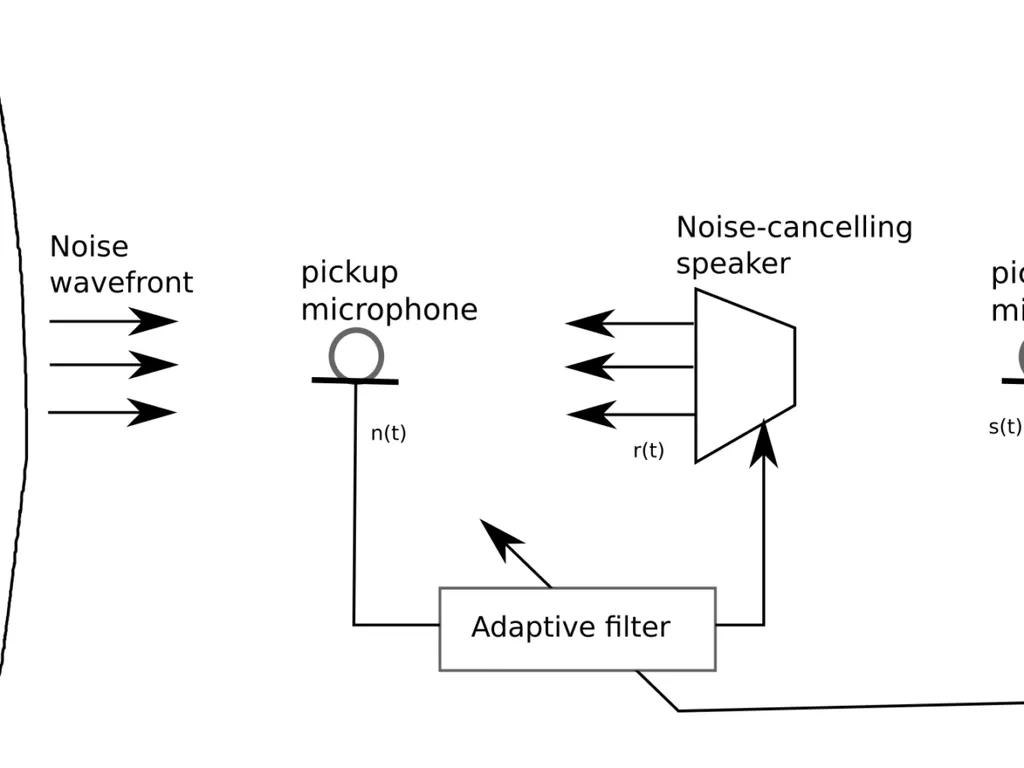
The innovative method proposed by Zhao and Wang involves placing an auxiliary reference microphone near the loudspeaker. This strategic placement allows the microphone to capture the far-end signal, which is often distorted by nonlinearities. The challenge, however, is that this reference signal is contaminated by near-end speech. To address this, the researchers have developed a preprocessing module based on Wiener filtering. This module estimates a compressed time-frequency mask, which is used to suppress the near-end components, effectively purifying the reference signal.
With the reference signal now free from near-end interference, the stage is set for a more effective linear AEC process. The purified signal enables the linear AEC stage to operate more efficiently, reducing the residual echo significantly. But the innovation doesn’t stop there. The residual error signal from the linear AEC stage is then fed into a deep neural network designed for joint residual echo and noise suppression. This multi-stage approach ensures that both echo and noise are minimized, resulting in a cleaner audio output.
The effectiveness of this method has been demonstrated through rigorous evaluation. On matched test sets, the new approach outperforms baseline methods, showcasing its superiority in controlled environments. To further test its robustness, the researchers evaluated the method on a mismatched dataset, where the nonlinear distortions were more pronounced and typically unknown. The results were impressive, with substantial performance gains observed, highlighting the method’s potential for real-world applications.
The implications of this research are vast, particularly for the music and audio production industries. In studios, live performances, and consumer audio devices, the ability to effectively cancel out echoes and reduce noise can significantly enhance audio quality. For musicians and producers, this means cleaner recordings and better sound reproduction. For consumers, it translates to improved audio experiences in home theaters, conference calls, and virtual meetings.
Moreover, the dual-microphone configuration and the use of deep neural networks open up new avenues for innovation in audio technology. As researchers continue to refine these techniques, we can expect even more sophisticated solutions that adapt to a wide range of acoustic environments. The work of Fei Zhao and Zhong-Qiu Wang not only addresses a longstanding challenge in AEC but also paves the way for future advancements in audio processing.
In conclusion, the introduction of a dual-microphone configuration and the integration of deep neural networks represent a significant leap forward in the field of acoustic echo cancellation. By effectively mitigating nonlinear distortions and enhancing audio clarity, this research offers a promising solution for both professionals and consumers. As the technology continues to evolve, we can look forward to a future where high-quality audio is accessible to everyone, regardless of the acoustic challenges posed by their environment.