In a significant leap forward for digital music creation, researchers have developed a novel approach to singing voice synthesis (SVS) that promises to revolutionize how we generate high-quality, expressive singing voices. This breakthrough, dubbed DiTSinger, addresses the longstanding challenges of data scarcity and model scalability that have hitherto limited the potential of diffusion-based SVS systems.
The researchers, led by Zongcai Du and Guilin Deng, have introduced a two-stage pipeline that begins with the creation of a compact seed set of human-sung recordings. This is achieved by pairing fixed melodies with a diverse array of lyrics generated by large language models (LLMs). From this foundation, melody-specific models are trained to synthesize over 500 hours of high-quality Chinese singing data. This approach not only ensures a rich and varied dataset but also allows for the scalable generation of singing voices that can be tailored to specific melodies.
Building on this corpus, the team proposes DiTSinger, a Diffusion Transformer enhanced with Rotary Positional Embedding (RoPE) and query-key normalization (qk-norm). This model is systematically scaled in depth, width, and resolution to achieve unprecedented fidelity in singing voice synthesis. The use of a diffusion transformer allows for the generation of highly expressive and natural-sounding singing voices, while the scaling of the model ensures that it can handle the complexities of real-world singing data.
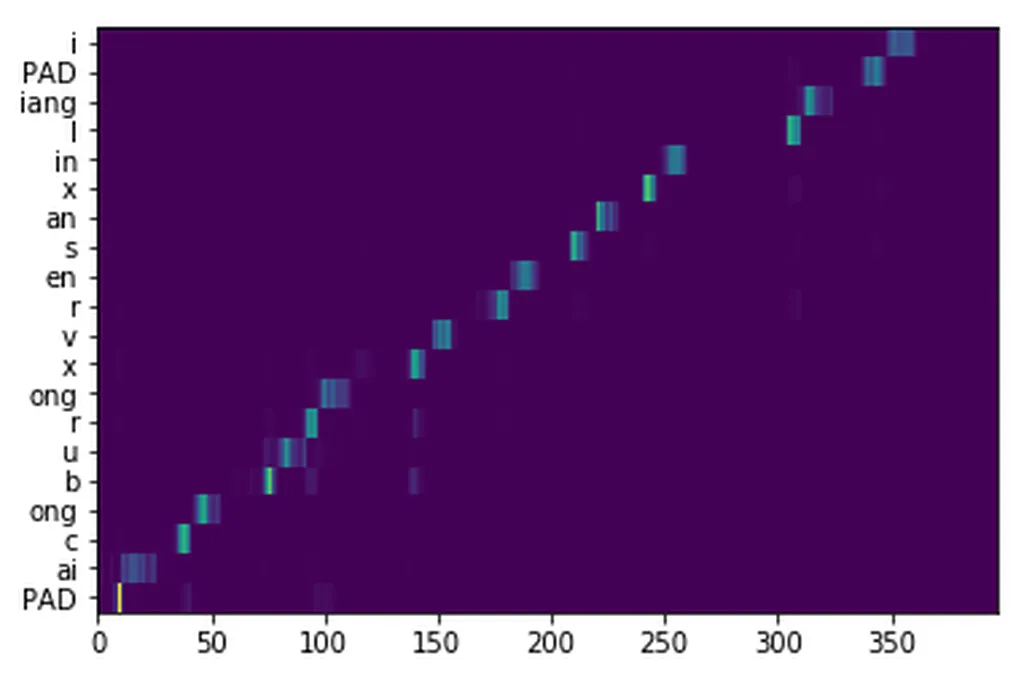
One of the most innovative aspects of DiTSinger is its implicit alignment mechanism. This mechanism eliminates the need for phoneme-level duration labels by constraining phoneme-to-acoustic attention within character-level spans. This not only simplifies the training process but also improves the robustness of the model under noisy or uncertain alignments. The result is a system that can generate high-quality singing voices with minimal manual intervention, making it a powerful tool for music producers and creators.
The practical applications of DiTSinger are vast and varied. For music producers, this technology offers a new way to create high-quality vocal tracks without the need for extensive recording sessions or the services of professional singers. It can be used to generate backing vocals, harmonies, or even lead vocals for a wide range of musical styles and genres. Additionally, DiTSinger can be a valuable tool for songwriters and composers, allowing them to quickly and easily experiment with different vocal styles and melodies.
For audio engineers and sound designers, DiTSinger provides a new way to explore the possibilities of digital sound synthesis. The model’s ability to generate highly expressive and natural-sounding singing voices opens up new avenues for experimentation and innovation in the field of audio production. Furthermore, the implicit alignment mechanism of DiTSinger can be applied to other areas of audio processing, such as speech synthesis and voice conversion, where alignment is a critical factor.
In conclusion, DiTSinger represents a significant advancement in the field of singing voice synthesis. Its innovative approach to data generation, model scaling, and alignment makes it a powerful tool for music creators and audio professionals. As the technology continues to evolve, it is likely to have a profound impact on the way we create and experience digital music. Read the original research paper here.