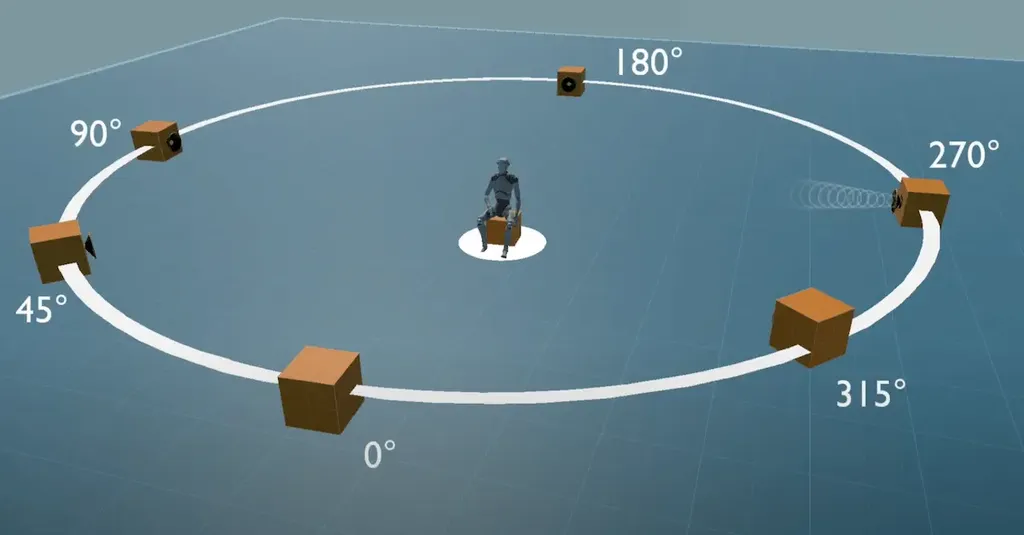

In a groundbreaking development, researchers have unveiled a novel approach to audio signal processing that harnesses the power of Complex-Valued Convolutional Neural Networks (CVCNNs), unlocking the often-overlooked potential of phase information. This innovative technique, spearheaded by Naman Agrawal, promises to revolutionize the way we analyze and manipulate audio signals, offering exciting prospects for music and audio production.
The study delves into the theoretical underpinnings of CVCNNs, introducing concepts such as complex convolutions, pooling layers, and Wirtinger-based differentiation. These foundational elements are crucial for understanding how CVCNNs can preserve and utilize phase information, which is typically neglected in conventional real-valued networks. To ensure stable training dynamics, the researchers also adapted training techniques, including complex batch normalization and weight initialization schemes.
To validate the effectiveness of CVCNNs, the researchers conducted a series of empirical evaluations. Initially, they benchmarked CVCNNs against real-valued CNNs using standard image datasets. Despite the focus on audio processing, this preliminary step was essential to establish baseline performance and confirm training stability. The results were promising, with CVCNNs demonstrating competitive performance, even under synthetic complex perturbations.
The second experiment shifted focus to audio classification using Mel-Frequency Cepstral Coefficients (MFCCs). Here, CVCNNs trained on real-valued MFCCs slightly outperformed their real-valued counterparts. However, preserving phase information in the input workflow presented challenges, highlighting the need for architectural modifications to fully exploit phase data.
In the final experiment, the researchers introduced Graph Neural Networks (GNNs) to model phase information via edge weighting. This approach yielded measurable gains in both binary and multi-class genre classification tasks, underscoring the expressive capacity of complex-valued architectures. The inclusion of phase information proved to be a meaningful and exploitable feature in audio processing applications.
While the current methods show significant promise, particularly with activations like cardioid, the researchers emphasize the need for future advances in phase-aware design. These developments will be crucial in fully leveraging the potential of complex representations in neural networks, paving the way for innovative applications in music and audio production.
For music producers and audio engineers, this breakthrough could lead to more sophisticated audio analysis tools, enhanced sound synthesis techniques, and improved audio effects processing. By incorporating phase information, these tools could offer greater precision and creativity in manipulating audio signals, ultimately enriching the auditory experience for both creators and listeners. Read the original research paper here.