
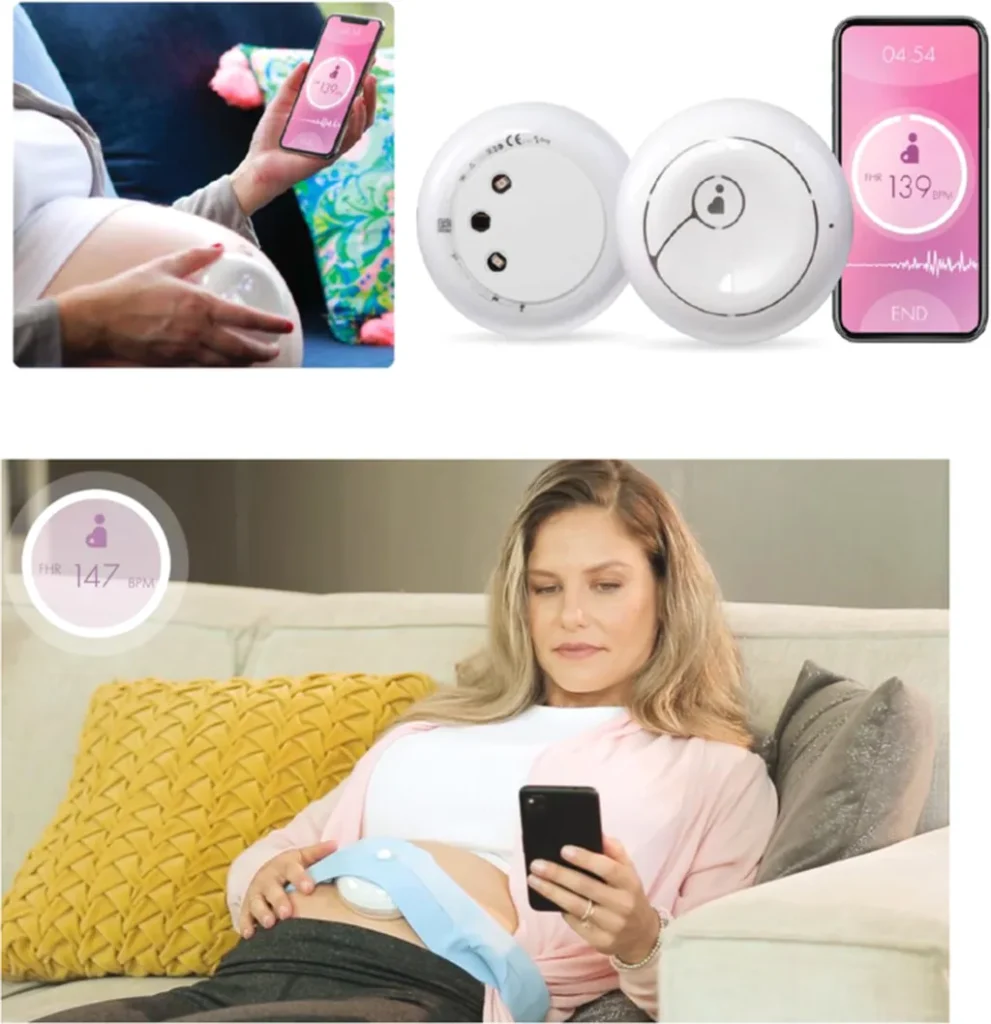
In the realm of fetal monitoring, Cardiotocography (CTG) plays a pivotal role, yet its effectiveness is often hindered by various artefacts that can obscure the true fetal heart rate (FHR) patterns. These artefacts can lead to misdiagnosis or delayed intervention, posing significant risks to both mother and child. Current deep-learning approaches to this problem often bypass comprehensive noise handling, focusing instead on downstream classification or applying minimal preprocessing. Traditional methods, on the other hand, rely on simple interpolation or rule-based filtering that only addresses missing samples and fails to correct complex artefact types. This is where CleanCTG, a novel deep learning model developed by researchers Sheng Wong, Beth Albert, and Gabriel Davis Jones, steps in to revolutionize the field.
CleanCTG is an end-to-end dual-stage model that first identifies multiple artefact types via multi-scale convolution and context-aware cross-attention. It then reconstructs corrupted segments through artefact-specific correction branches. The model was trained using over 800,000 minutes of physiologically realistic, synthetically corrupted CTGs derived from expert-verified “clean” recordings. The results are impressive: on synthetic data, CleanCTG achieved perfect artefact detection with an Area Under the Receiver Operating Characteristic Curve (AU-ROC) of 1.00 and reduced mean squared error (MSE) on corrupted segments to 2.74 x 10^-4, outperforming the next best method by more than 60%.
The model’s efficacy was further validated on 10,190 minutes of clinician-annotated segments, yielding an AU-ROC of 0.95, with a sensitivity of 83.44% and specificity of 94.22%. These results surpassed six comparator classifiers, demonstrating CleanCTG’s superior performance. Moreover, when integrated with the Dawes-Redman system on 933 clinical CTG recordings, denoised traces increased specificity from 80.70% to 82.70% and shortened the median time to decision by 33%. This suggests that explicit artefact removal and signal reconstruction can maintain diagnostic accuracy while enabling shorter monitoring sessions.
The practical applications of CleanCTG are vast. By providing more reliable CTG interpretation, it can lead to more accurate diagnoses and timely interventions, ultimately improving fetal and maternal outcomes. The model’s ability to handle diverse artefact types and reconstruct corrupted segments makes it a valuable tool in clinical settings. Furthermore, its integration with existing systems like the Dawes-Redman system demonstrates its potential for seamless incorporation into current medical practices. As such, CleanCTG represents a significant advancement in the field of fetal monitoring, offering a practical route to more reliable and efficient CTG interpretation. Read the original research paper here.