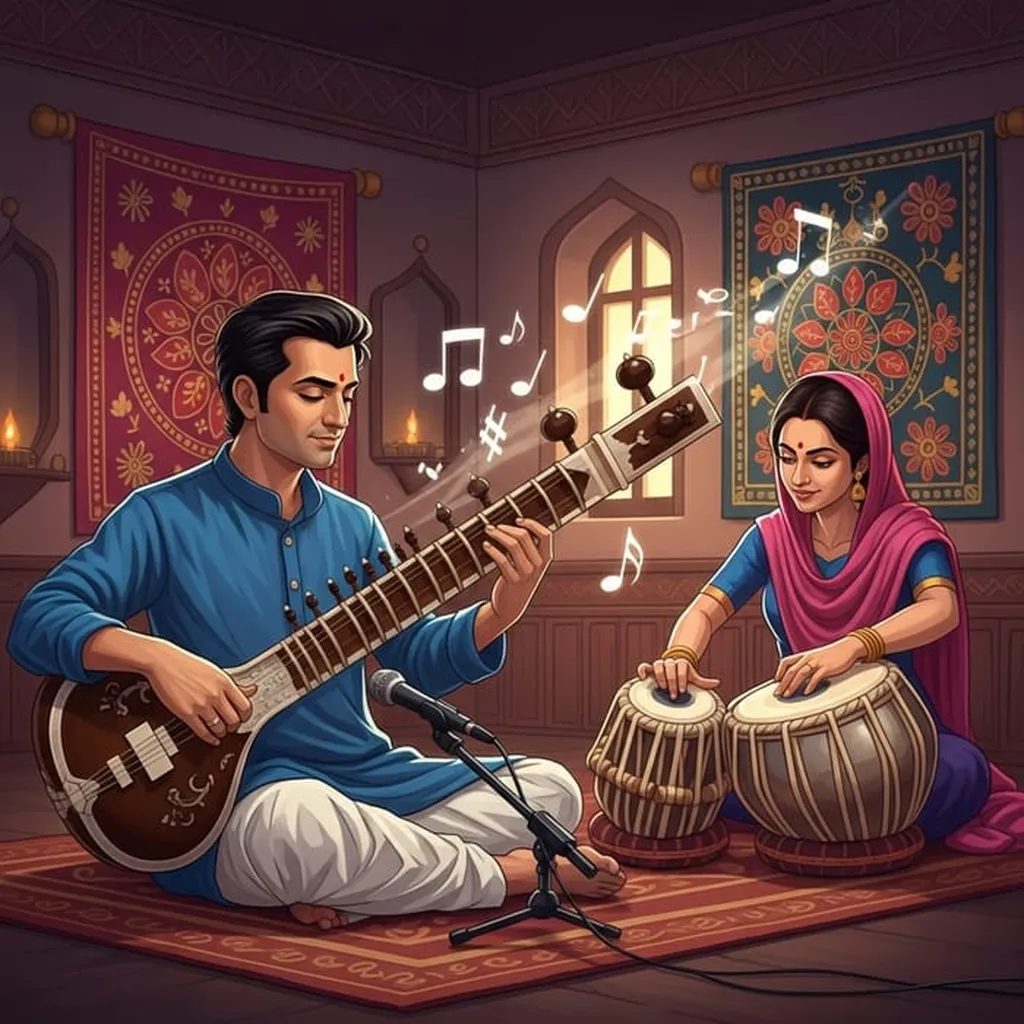
In the realm of Indian classical music, Dhrupad vocal concerts are a mesmerizing blend of structured compositions and spontaneous improvisations. The concert typically features a composition section, known as a bandish, interspersed with improvised episodes characterized by heightened rhythmic activity. This rhythmic interplay between the vocalist and the percussionist is a defining feature of Dhrupad performances. Researchers Rohit M. A. and Preeti Rao have embarked on a groundbreaking study to automatically detect and label these improvised sections by tracking the changing rhythmic density in relation to the underlying metric tempo of the piece.
The researchers have introduced an annotated dataset of Dhrupad bandish concert sections, which serves as a foundation for their innovative approach. At the heart of their method is a Convolutional Neural Network (CNN)-based system, trained to identify local tempo relationships. This system is followed by a temporal smoothing process to ensure accurate detection of rhythmic changes over time. Additionally, the researchers employ audio source separation as a pre-processing step. This technique isolates the individual surface densities of the vocals and the percussion, providing a more precise analysis of the rhythmic interaction between the two performers.
The implications of this research are profound for both the music and audio production sectors. By automating the segmentation of Dhrupad vocal performances, this technology can enhance the way we archive, analyze, and appreciate Indian classical music. For music producers and audio engineers, the ability to automatically detect and label improvised sections can streamline the editing and mixing process, ensuring that the rhythmic nuances of the performance are preserved. Furthermore, this research paves the way for developing advanced tools that can assist musicians in practicing and refining their improvisational skills.
The automatic segmentation of Dhrupad vocal performances also opens up new avenues for music education and research. Educators can use this technology to create interactive learning modules that help students understand the structure and nuances of Dhrupad performances. Researchers, on the other hand, can leverage this method to explore the intricate rhythmic patterns and interactions that define this ancient musical tradition. By providing a comprehensive musical description of concert sections, this research not only preserves the cultural heritage of Dhrupad but also fosters a deeper appreciation of its artistic complexity.
In conclusion, the work of Rohit M. A. and Preeti Rao represents a significant advancement in the field of music technology. Their innovative approach to automatic segmentation of Dhrupad vocal performances offers valuable insights into the rhythmic interactions between vocalists and percussionists. This research not only enhances our understanding of Indian classical music but also provides practical applications for music production, education, and research. As we continue to explore the intersection of technology and music, such advancements will play a crucial role in preserving and promoting the rich cultural heritage of musical traditions around the world.