In the ever-evolving landscape of music technology, artificial intelligence is emerging as a powerful force, poised to revolutionize the way we learn and interact with music. Recent breakthroughs in AI have paved the way for innovative music education tools, offering personalized, engaging, and effective learning experiences. Researchers Mayank Sanganeria and Rohan Gala have presented two compelling case studies that leverage these AI advancements to address longstanding challenges in music education.
The first case study introduces an application that harnesses Automatic Chord Recognition to create personalized exercises from audio tracks. This technology listens to a piece of music and identifies the chords being played, then uses this information to generate tailored ear training exercises. By connecting traditional ear training with real-world musical contexts, this application makes learning more relevant and engaging for students. For instance, a student interested in jazz could use a jazz track to practice recognizing and understanding jazz chord progressions, making the learning process more enjoyable and effective.
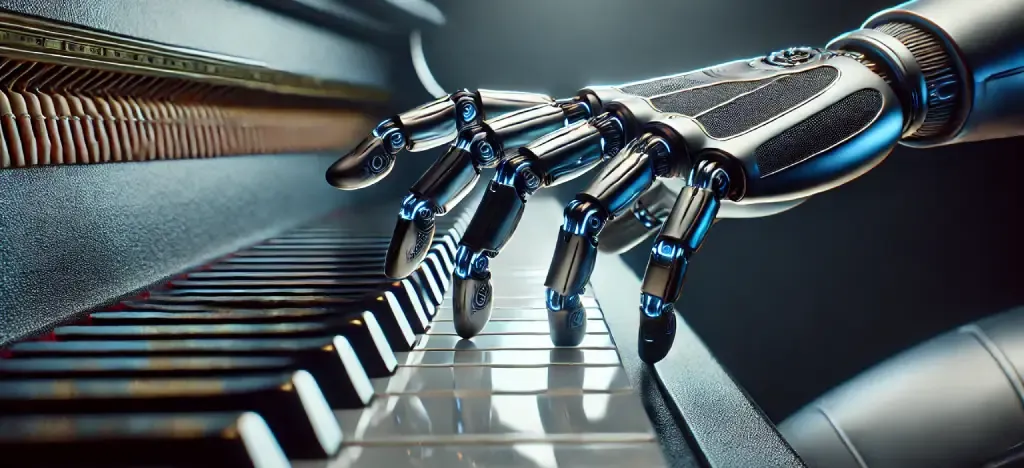
The second case study prototypes adaptive piano method books that utilize Automatic Music Transcription to generate exercises at different skill levels. This technology transcribes music from audio files into sheet music, allowing the application to create exercises that match a student’s skill level while retaining a close connection to their musical interests. For example, a beginner piano student who loves pop music could use a pop song to generate beginner-level exercises, gradually increasing the difficulty as their skills improve. This approach keeps students motivated and engaged by aligning their learning with their musical passions.
These applications demonstrate how recent AI developments can democratize access to high-quality music education. By making learning more personalized and engaging, these tools can help students of all ages and skill levels to better understand and appreciate music. Moreover, they promote rich interaction with music in the age of generative AI, fostering human participation in musical expression.
The practical applications of these technologies extend beyond music education. For instance, music producers and composers could use these tools to analyze and understand the structure of existing music, drawing inspiration and ideas for their own compositions. Additionally, these technologies could be integrated into music therapy programs, providing personalized and engaging musical experiences for patients.
In conclusion, the work of Sanganeria and Gala showcases the transformative potential of AI in music education. By inspiring other efforts in the community, these researchers hope to remove barriers to access to high-quality music education and foster a deeper, more meaningful engagement with music for all. As AI continues to advance, we can expect to see even more innovative applications that will shape the future of music and music education. Read the original research paper here.