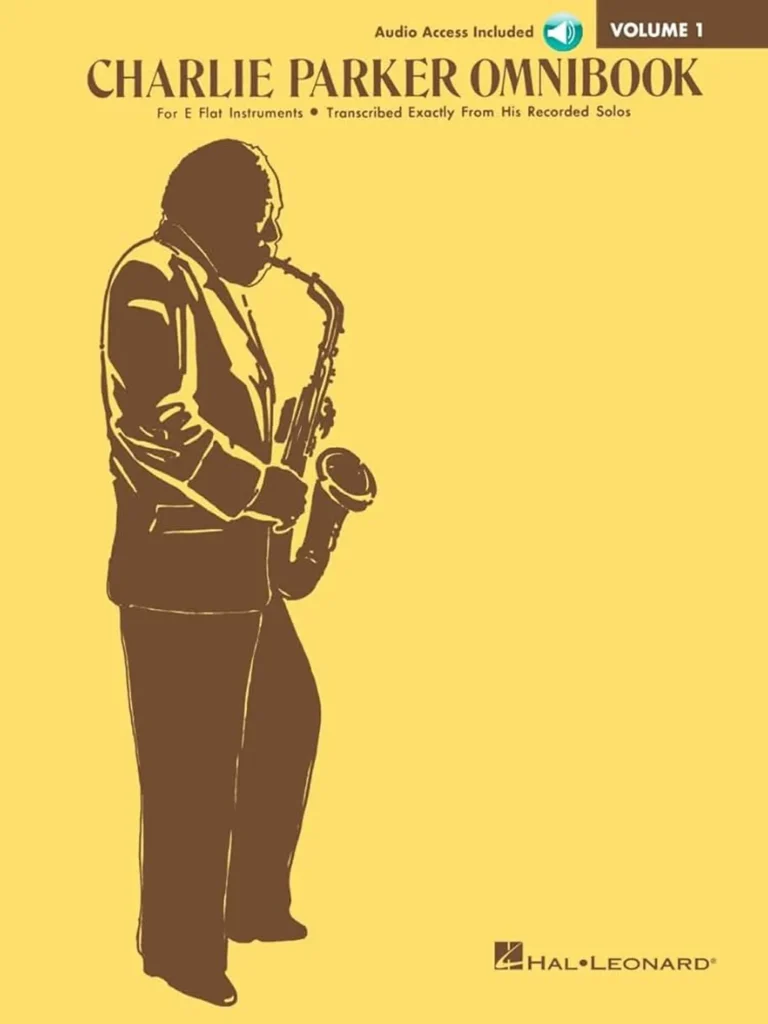
In a groundbreaking development for music technology, researchers Xavier Riley and Simon Dixon have created an automatic transcription pipeline that can reconstruct the iconic Charlie Parker Omnibook directly from audio, without human intervention. This advancement could revolutionize music education and preservation, particularly in the realm of jazz.
The Charlie Parker Omnibook, a collection of transcriptions of the legendary saxophonist’s solos, has been a cornerstone of jazz education since its publication. Pianist Ethan Iverson has even described it as “the most important jazz education text ever published.” However, creating such transcriptions has traditionally been a labor-intensive process, requiring meticulous listening and notating by hand. Riley and Dixon’s research aims to change that by leveraging state-of-the-art music technology.
Their pipeline is composed of three main components: a newly trained source separation model for saxophone, a new MIDI transcription model for solo saxophone, and an adaptation of an existing MIDI-to-score method for monophonic instruments. The source separation model isolates the saxophone audio from the rest of the band, allowing the transcription models to focus solely on the saxophone part. The MIDI transcription model then converts the isolated saxophone audio into MIDI data, which is finally transformed into sheet music by the MIDI-to-score method.
To test their pipeline, the researchers created an enhanced dataset of Charlie Parker transcriptions, complete with accurate MIDI alignments and downbeat annotations. This dataset serves as a challenging new benchmark for automatic audio-to-score transcription, pushing the boundaries of what’s possible in music technology beyond mere audio-to-MIDI transcription.
The implications of this research are significant for music education and preservation. By automating the transcription process, musicians could have access to accurate, ready-to-use scores without the need for time-consuming corrections or revisions. This could be particularly beneficial for jazz education, where learning to transcribe and analyze solos is a crucial skill. Moreover, it could aid in the preservation of musical works, ensuring that they are accurately documented and accessible for future generations.
Riley and Dixon have made all model checkpoints, data, and code for the transcription pipeline available to download, facilitating further research and development in this field. As the technology improves, the automatic transcription of complex jazz solos could become a routine possibility, enriching the resources available for music education and preservation. This breakthrough represents a significant step forward in the intersection of music and technology, opening up new possibilities for musicians, educators, and researchers alike. Read the original research paper here.