In the rapidly evolving digital landscape, the art of steganography—concealing secret data within seemingly innocuous media—faces significant challenges. Traditional steganographic methods are often rigid, designed to work with a single type of carrier media, such as images, audio, or text. This limitation hinders their effectiveness in the diverse multimedia environment of today. Fixed approaches fail to adapt to the varying strengths and weaknesses of different media types, potentially compromising security by inadvertently allocating data to less reliable carriers.
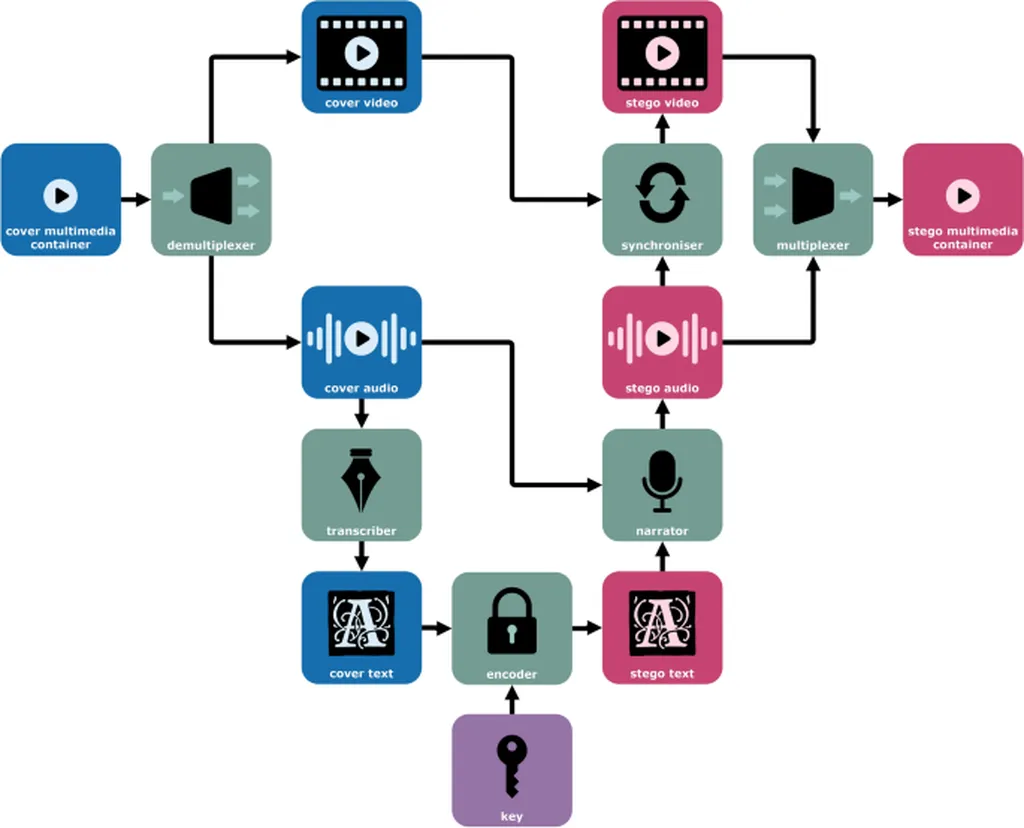
A groundbreaking study led by researchers Abhirup Das, Pranav Dudani, Shruti Sharma, and Ravi Kumar C. introduces an Intelligent Carrier Allocation framework, underpinned by a Cross-Modal Reasoning (CMR) Engine. This innovative system evaluates a broad spectrum of carrier media, including images, audio, and text, to determine their suitability for steganographic purposes. The CMR Engine assesses critical metrics such as entropy, signal complexity, and vocabulary richness to generate a reliability score for each modality. These scores inform the framework’s adaptive allocation strategy, which distributes the secret bitstream intelligently, favoring carriers deemed stronger and more complex.
This adaptive approach ensures that the secret data is embedded in the most resilient carriers, thereby enhancing the overall security and robustness of the steganographic system. By dynamically adjusting to the characteristics of different media types, the framework minimizes the risk of detection through steganalysis, making it a formidable tool in the realm of secure communication. The researchers demonstrate that this reasoning-based method outperforms static, non-adaptive multimodal techniques, offering superior data protection and security.
The implications of this research are profound for the field of steganography and beyond. As digital communication continues to diversify, the need for adaptive, intelligent systems capable of navigating the complexities of various media types becomes ever more critical. The Intelligent Carrier Allocation framework represents a significant step forward in this direction, paving the way for more secure and sophisticated methods of secret communication. This advancement could have wide-ranging applications, from enhancing cybersecurity protocols to safeguarding sensitive information in an increasingly interconnected world.