
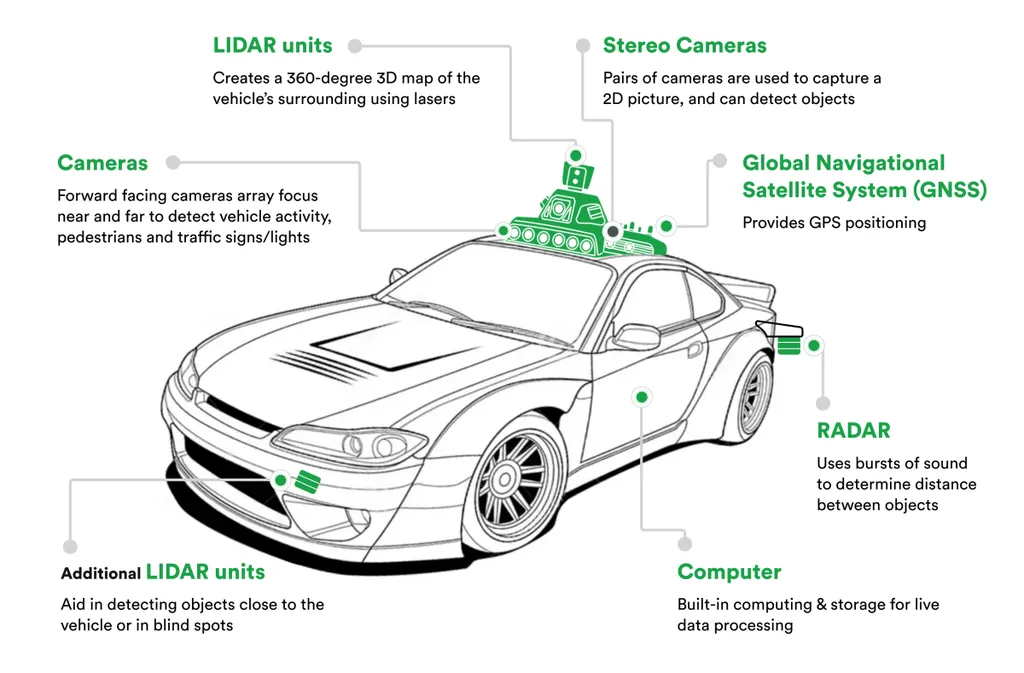
In the relentless pursuit of developing safe Autonomous Driving Systems (ADS), researchers have turned to Virtual Testing Environments (VTE) as a practical alternative to exhaustive physical testing. The crux of this approach lies in comparing VTE-generated sensor outputs with their real-world counterparts to ensure the VTE’s accuracy in representing reality. A recent study, spearheaded by Syed Mostaquim Ali and colleagues, delves into this very concept, focusing on LiDAR scans.
The researchers embarked on a comprehensive experimental approach to identify suitable evaluation metrics for comparing real-world and simulated LiDAR scans. They tested various metrics, including sensitivity and accuracy, under different conditions such as noise, density, distortion, sensor orientation, and channel settings. The results were clear: the Density Aware Chamfer Distance (DCD) emerged as the most effective metric across all scenarios.
The second phase of the research involved creating a Virtual Testing Environment using real LiDAR scan data. This data was collected in a controlled environment with static objects, using an instrumented vehicle equipped with LiDAR, IMU, and cameras. Simulated LiDAR scans were then generated from the VTEs, matching the pose of the real LiDAR scans. The comparison of these scans, in terms of model perception and geometric similarity, revealed a mean Intersection over Union (mIoU) of 21% with corrected intensity and an average Density Aware Chamfer Distance (DCD) of 0.63. This indicates a slight difference in the geometric properties of simulated and real LiDAR scans and a significant difference between model outputs.
The study found that the Density Aware Chamfer Distance was the most correlated metric with perception methods. This research not only underscores the importance of rigorous evaluation metrics in the development of ADS but also highlights the potential of Virtual Testing Environments in ensuring the safety and reliability of autonomous vehicles. As we continue to push the boundaries of technology, such studies will be instrumental in shaping the future of autonomous driving.