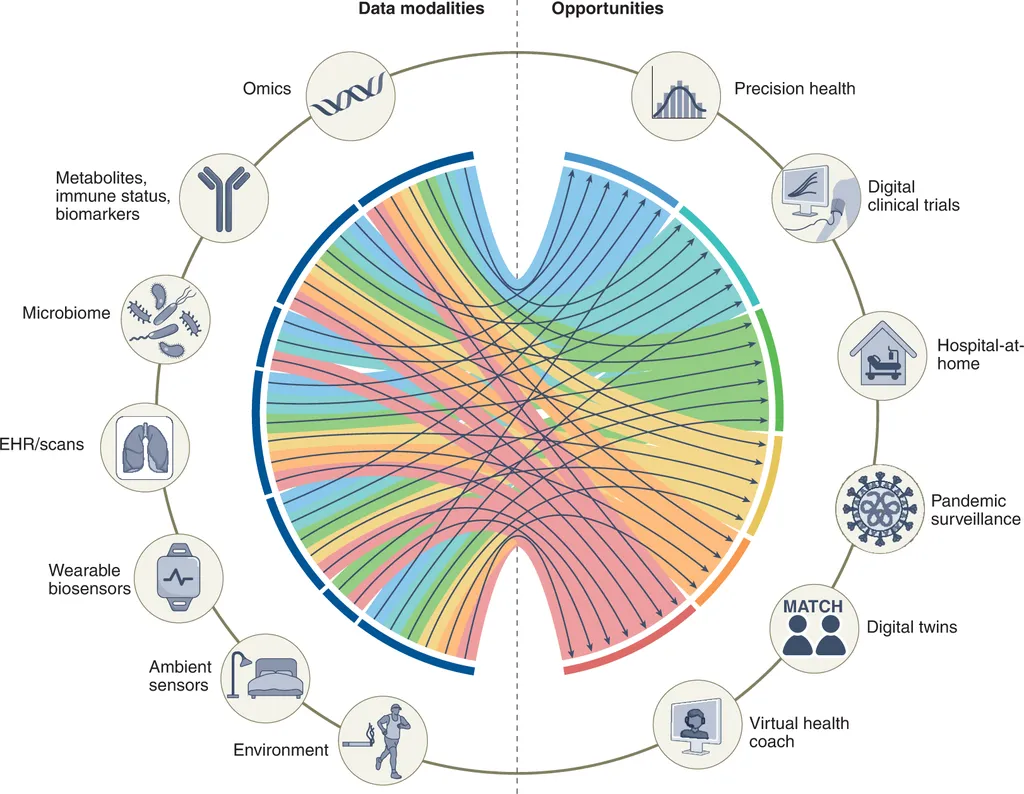
In a groundbreaking development, researchers have unveiled an innovative artificial intelligence (AI) framework that promises to revolutionize early disease detection. The study, spearheaded by a team of dedicated scientists, integrates image analysis, thermal imaging, and audio signal processing to detect skin cancer, vascular blood clots, and cardiopulmonary abnormalities with remarkable accuracy. This multimodal approach addresses the critical need for cost-effective, non-invasive, and accessible diagnostic tools, particularly in low-resource regions.
The research team, comprising Manisha More, Kavya Bhand, Kaustubh Mukdam, Kavya Sharma, Manas Kawtikwar, Hridayansh Kaware, and Prajwal Kavhar, employed a fine-tuned MobileNetV2 convolutional neural network (CNN) for skin lesion classification. By training the model on the ISIC 2019 dataset, they achieved an impressive accuracy of 89.3%, with a sensitivity of 91.6% and specificity of 88.2%. This high performance indicates the potential for early and accurate detection of skin cancer, which could significantly improve patient outcomes and reduce healthcare costs.
For vascular blood clot detection, the researchers utilized thermal imaging and a support vector machine (SVM) with handcrafted features. The model demonstrated an accuracy of 86.4% and an area under the curve (AUC) of 0.89 on both synthetic and clinical data. This method offers a non-invasive and accessible way to identify blood clots, which are often life-threatening if undetected.
In the realm of cardiopulmonary health, the team processed lung and heart sound datasets from PhysioNet and Pascal using Mel-Frequency Cepstral Coefficients (MFCC). These audio signals were then classified via a Random Forest algorithm, achieving an accuracy of 87.2% and a sensitivity of 85.7%. This approach provides a promising avenue for early detection of cardiopulmonary abnormalities, which are often challenging to diagnose with traditional methods.
The comparative evaluation of the proposed system against state-of-the-art models highlights its competitive performance while maintaining a lightweight and deployable framework. This scalability and accessibility make it suitable for implementation on low-cost devices, ensuring that even resource-limited regions can benefit from advanced diagnostic capabilities.
The implications of this research are profound. By integrating multiple diagnostic modalities into a single, accessible framework, the researchers have taken a significant step toward scalable, real-time, and affordable AI-based pre-diagnostic healthcare solutions. This innovation has the potential to transform healthcare delivery, particularly in underserved areas, by providing early detection and intervention opportunities that could save countless lives.
As the healthcare industry continues to evolve, the adoption of such AI-driven diagnostic tools will likely become more prevalent. The research underscores the importance of interdisciplinary collaboration and the power of machine learning in addressing critical health challenges. With further refinement and broader implementation, this AI framework could become a cornerstone of modern healthcare, ensuring that early disease detection is no longer a privilege but a universal right.