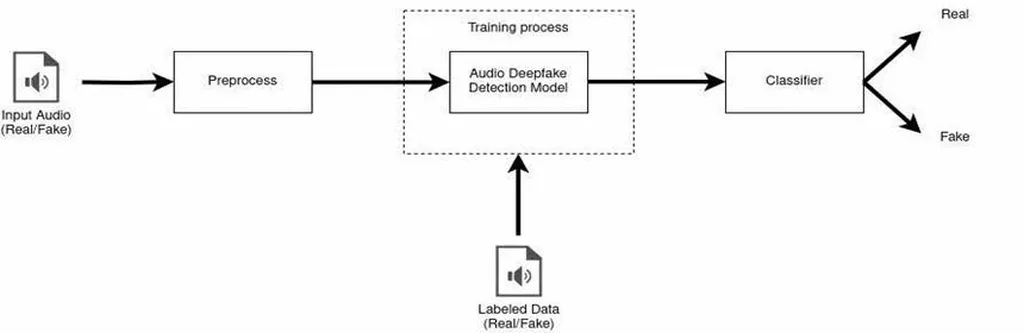
In the rapidly evolving digital landscape, the creation of highly realistic deepfake content has become a significant threat to digital trust. The advancements in generative adversarial networks (GANs) and diffusion models have made it increasingly challenging to distinguish between authentic and synthetic media. Traditional unimodal detection methods, which focus on either audio or visual elements alone, have shown progress but fall short in leveraging cross-modal correlations and precisely localizing forged segments. This limitation hampers their effectiveness against sophisticated, fine-grained manipulations.
To address these critical gaps, researchers Chende Zheng, Ruiqi Suo, Zhoulin Ji, Jingyi Deng, Fangbin Yi, Chenhao Lin, and Chao Shen have introduced a multi-modal deepfake detection and localization framework. This innovative approach is based on a Feature Pyramid-Transformer (FPN-Transformer) and aims to enhance cross-modal generalization and temporal boundary regression. The framework utilizes pre-trained self-supervised models, specifically WavLM for audio and CLIP for video, to extract hierarchical temporal features. These features are then used to construct a multi-scale feature pyramid through R-TLM blocks with localized attention mechanisms, enabling joint analysis of cross-context temporal dependencies.
One of the standout features of this framework is its dual-branch prediction head, which simultaneously predicts forgery probabilities and refines temporal offsets of manipulated segments. This capability allows for frame-level localization precision, a significant advancement in the field of deepfake detection. The researchers evaluated their approach on the test set of the IJCAI’25 DDL-AV benchmark, achieving a commendable final score of 0.7535 for cross-modal deepfake detection and localization in challenging environments. The experimental results confirm the effectiveness of their approach and provide a novel way for generalized deepfake detection.
The implications of this research are far-reaching, particularly in the music and audio industry. As digital content becomes increasingly sophisticated, the ability to detect and localize deepfakes accurately is crucial for maintaining trust and authenticity. This framework could be particularly useful in audio production, where the integrity of recorded content is paramount. By leveraging cross-modal correlations, producers and editors can ensure that both audio and visual elements are authentic, thereby preserving the credibility of their work.
Moreover, the practical applications of this framework extend beyond detection. The precise localization of forged segments can aid in the restoration and correction of manipulated content, ensuring that the final product is free from synthetic alterations. This is especially important in the music industry, where the authenticity of performances and recordings is highly valued.
The researchers have made their code available on GitHub, encouraging further exploration and development in the field of deepfake detection. This open-access approach fosters collaboration and innovation, paving the way for more advanced and robust detection methods. As the digital landscape continues to evolve, the need for reliable and effective deepfake detection frameworks becomes ever more critical. The work of Zheng, Suo, Ji, Deng, Yi, Lin, and Shen represents a significant step forward in this endeavor, offering a promising solution to the challenges posed by deepfake content.