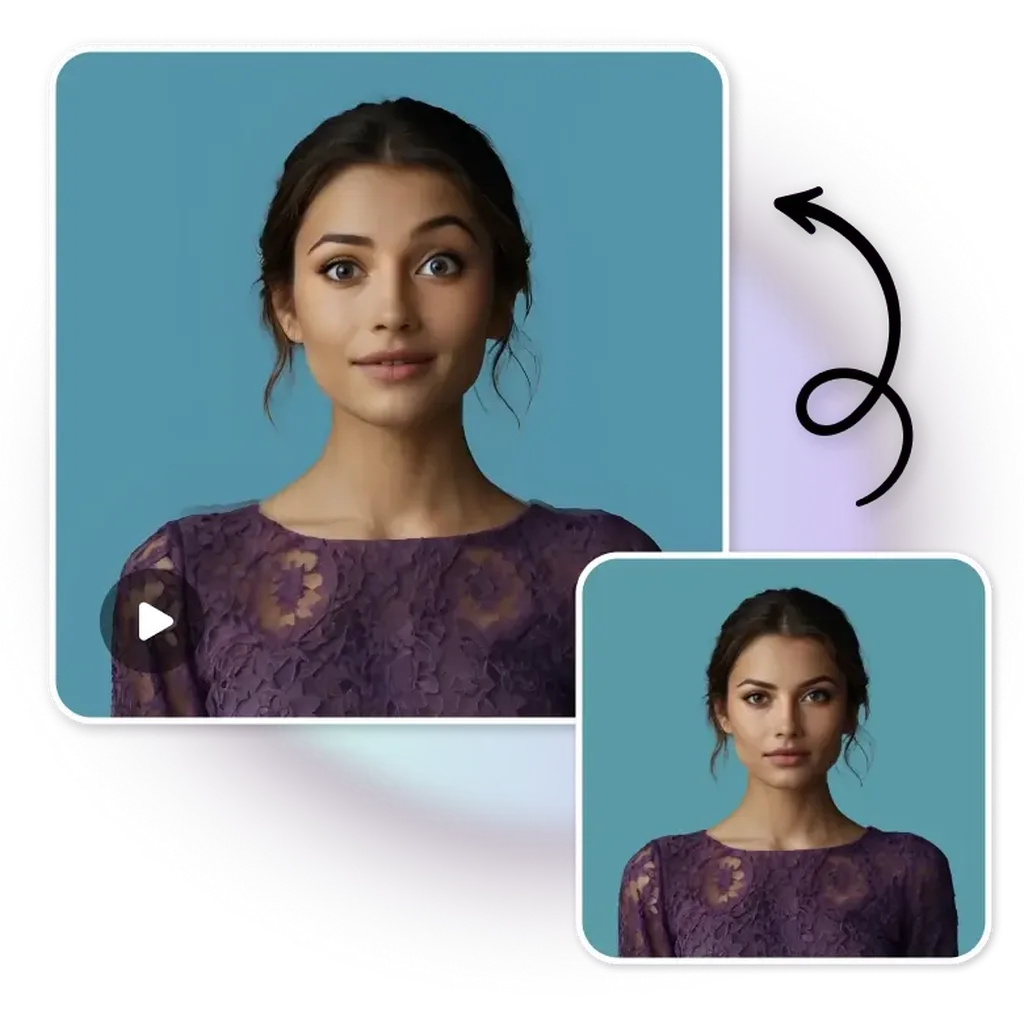
In the realm of digital animation and virtual avatars, creating a realistic and animatable portrait from a single static image has been a persistent challenge. Existing methods often fall short in capturing the nuances of facial expressions, the associated body movements, and the dynamic background. However, a groundbreaking framework proposed by researchers Mengchao Wang, Qiang Wang, Fan Jiang, Yaqi Fan, Yunpeng Zhang, Yonggang Qi, Kun Zhao, and Mu Xu promises to revolutionize this process. Their novel approach leverages a pretrained video diffusion transformer model to generate high-fidelity, coherent talking portraits with controllable motion dynamics.
At the heart of this innovative framework is a dual-stage audio-visual alignment strategy. The first stage employs a clip-level training scheme to establish coherent global motion by aligning audio-driven dynamics across the entire scene. This includes the reference portrait, contextual objects, and the background, ensuring a seamless and realistic animation. The second stage refines lip movements at the frame level using a lip-tracing mask, guaranteeing precise synchronization with audio signals. This meticulous attention to detail ensures that the generated portraits are not only lifelike but also accurately convey the intended audio content.
To preserve the identity of the subject without compromising motion flexibility, the researchers have replaced the commonly used reference network with a facial-focused cross-attention module. This module effectively maintains facial consistency throughout the video, ensuring that the avatar retains the original person’s likeness. Additionally, the framework integrates a motion intensity modulation module that explicitly controls the intensity of expressions and body movements. This feature allows for controllable manipulation of portrait movements beyond mere lip motion, adding a new dimension of expressiveness and realism to the generated avatars.
The researchers have conducted extensive experimental results to validate their approach, demonstrating that it achieves higher quality with better realism, coherence, motion intensity, and identity preservation compared to existing methods. This breakthrough has significant implications for various applications in the music and audio industry. For instance, it could be used to create realistic virtual performers for music videos, concerts, and live streams, enhancing the audience’s experience and immersion. Additionally, it could be employed in audio production to generate synchronized visual content for audiobooks, podcasts, and voice-over projects, adding a visual dimension to purely auditory content.
The framework’s ability to generate high-fidelity, coherent talking portraits with controllable motion dynamics opens up new possibilities for creativity and innovation in the digital realm. As the technology continues to evolve, we can expect to see even more sophisticated and lifelike avatars that blur the line between the real and the virtual. This exciting development is a testament to the power of advanced machine learning techniques in pushing the boundaries of what is possible in digital animation and virtual reality.