
The world is currently experiencing an unprecedented surge in interest and investment in artificial intelligence (AI), with tech stocks soaring and investors eager to capitalize on the potential of this transformative technology. However, there is growing concern that we may be in the midst of an AI bubble, with the value of companies in this sector outpacing their fundamental worth.
The amount of money flowing into tech companies is staggering, with these firms now accounting for just under a third of the entire value of the main S&P 500 share market index on the New York stock exchange. This has been a key factor in pushing Wall Street to record highs this year. The excitement around AI is palpable, with investors eager to get a piece of the action.
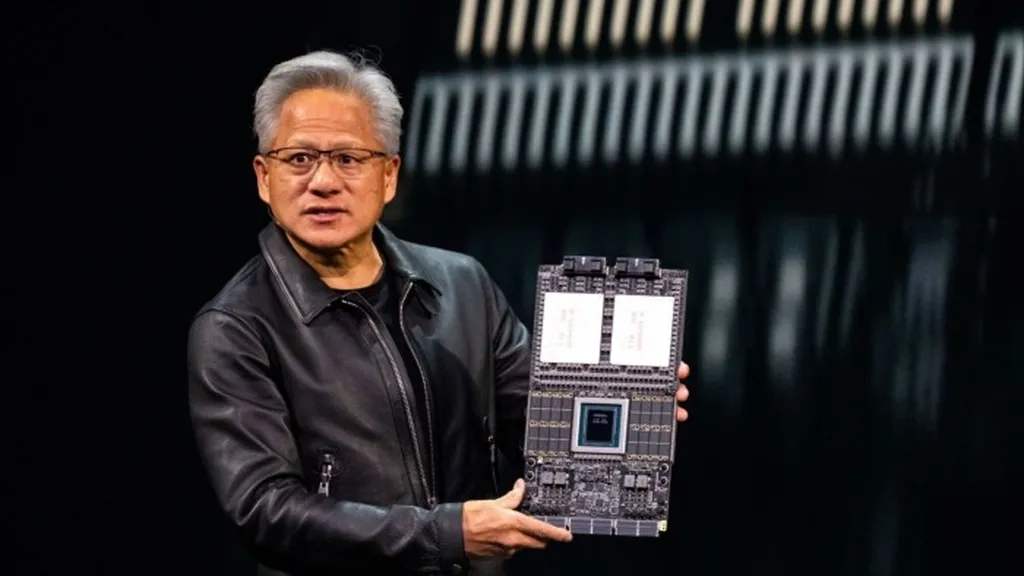
One company that has been at the forefront of this market fervor is Nvidia, which makes chips and electronic circuits. The share price for Nvidia has jumped by more than 30 percent this year and has grown more than 1,000 percent since the beginning of 2023. In October this year, Nvidia became the world’s first company to hit five-trillion US dollars in value. As James Thomson, a columnist for the Australian Financial Review, noted, “It’s that old adage of a gold rush. You want to be selling the picks and the shovels. Nvidia is the picks and the shovels.”
Even key players in the AI industry acknowledge that things are getting a bit exuberant. Sam Altman, the CEO of OpenAI, has said that investors are getting over-excited about AI. Altman has also been sensitive to questions about OpenAI’s numbers, with Brad Gerstner, an investor, questioning how a company with $13 billion in revenues can make $1.4 trillion in spending commitments. Altman responded by saying that OpenAI is doing way more revenues than that and offered to find Gerstner a buyer for his shares.
The concerns about the AI boom extend well beyond the markets. The OECD has warned of the risk to the broader US economy of over-valued tech stocks. Nicki Hutley, an economist, noted that the fact we are talking about a bubble but still investing in that bubble is very curious. She warned that sooner or later, somebody is going to stop passing the parcel, and the music will stop, which could get quite ugly.
Comparisons are being drawn to the dot-com bubble at the turn of the century. While most of the big tech stock action is happening nearly 20,000 kilometers away on Wall Street, a lot of Australians do have skin in this game whether they like it or not. Australian superannuation funds have roughly $600 billion of their members’ money invested in the US, with a significant proportion of this cash exposed to those tech stocks. The amount of super money pouring into the US is expected to top 2 trillion dollars by 2035.
James Thomson believes that a popping of the AI bubble will be felt keenly in Australia. He noted that the value of people’s portfolios will go down, which can have a reverse wealth effect. People may feel like their super’s not doing as well, or they may need to rein in their spending a bit, which can slow down the economy.
For all this concern and worry about the AI boom, the technological advancements and resulting economic benefits could change our lives forever. Nicki Hutley noted that what will be laid for future generations by the investment today is going to be profoundly game-changing for our economies, our lifestyles, and our workforce.
In conclusion, while the current excitement around AI is palpable, there are growing concerns about an AI bubble. The value of tech stocks is soaring, and investors are eager to capitalize on the potential of this transformative technology. However, there are warnings that the value of these companies may be outpacing their fundamental worth, and a popping of the bubble could have significant economic consequences. As the saying goes, “It’s not a bubble until it bursts.”

