In a groundbreaking move to bridge the gap between technology and mental health, a team of researchers has unveiled a protocol for creating a multimodal dataset that could revolutionize the way we understand and interact with individuals suffering from social anxiety. The team, comprising Vesna Poprcova, Iulia Lefter, Matthias Wieser, Martijn Warnier, and Frances Brazier, aims to harness the power of artificial intelligence and social robotics to shed new light on this prevalent condition.
Social anxiety, a condition that affects interpersonal interactions and social functioning, has been a challenge to study due to the lack of comprehensive datasets. The researchers’ protocol is designed to address this issue by collecting a rich, multimodal dataset that includes synchronised audio, video, and physiological recordings. This approach allows each signal modality to provide unique insights into the manifestations of social anxiety, ultimately leading to a more holistic understanding of the condition.
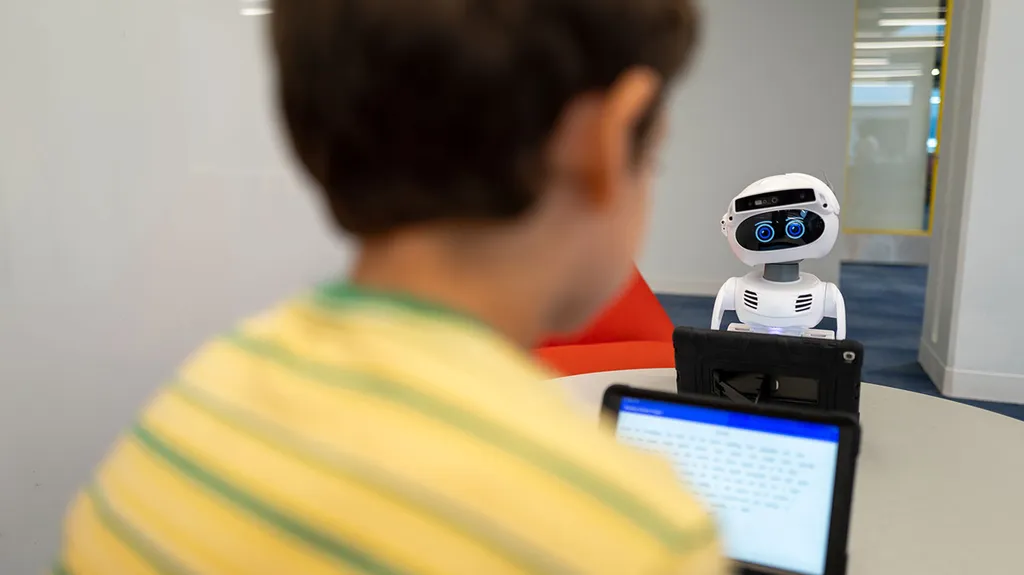
The dataset will be collected from at least 70 participants, who will be grouped according to their level of social anxiety. They will engage in approximately 10-minute interactive Wizard-of-Oz role-play scenarios with the Furhat social robot under controlled experimental conditions. This innovative use of a social robot not only ensures consistency in the interaction but also opens up new avenues for studying human-robot interactions in the context of mental health.
Moreover, the dataset will be enriched with contextual data, providing deeper insights into individual variability in social anxiety responses. This additional layer of information can help researchers and developers create more personalized and effective interventions for individuals with social anxiety.
The potential applications of this research are vast. By providing support for robust multimodal detection of social anxiety, this work can contribute to the development of affect-adaptive human-robot interaction systems. These systems could be used in therapeutic settings to help individuals with social anxiety practice and improve their social skills in a safe and controlled environment. Furthermore, the insights gained from this research could also be applied to improve the design of social robots and other AI-driven technologies, making them more empathetic and responsive to the needs of users with social anxiety.
In conclusion, this research represents a significant step forward in the intersection of technology and mental health. By leveraging the power of multimodal datasets and social robotics, the researchers are paving the way for more effective and personalized interventions for individuals with social anxiety. The potential impact of this work extends beyond the realm of mental health, offering valuable insights for the broader field of human-robot interaction.