
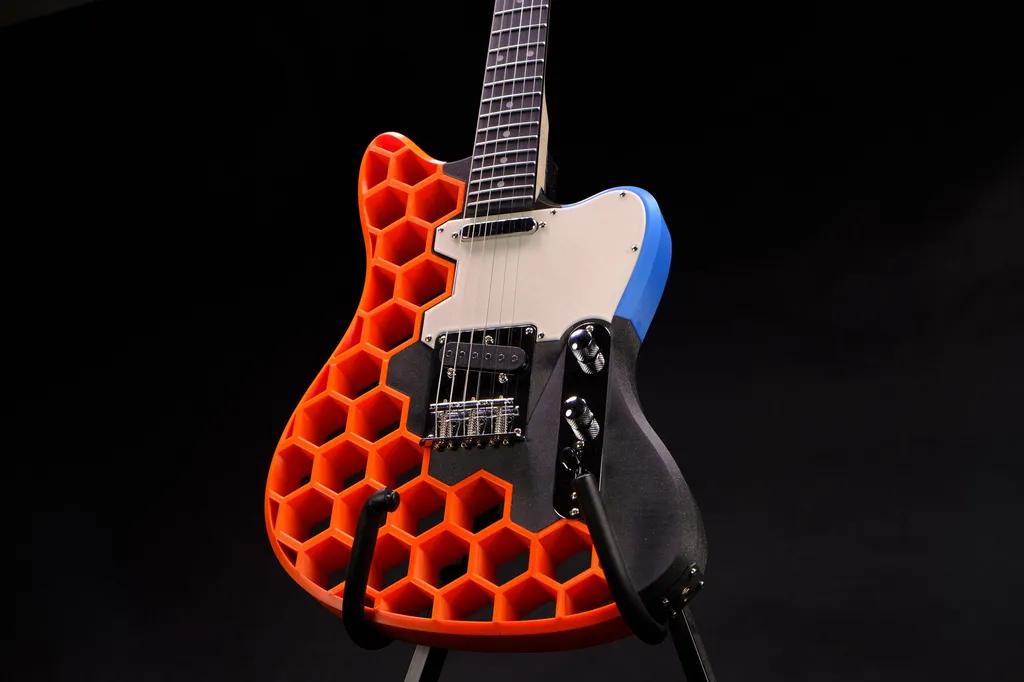
In a groundbreaking study conducted by Timothy Tran in collaboration with William Schiesser, the feasibility of producing affordable and functional acoustic guitars using 3D printing technology has been thoroughly investigated. The research focused on creating structural designs that deliver proper tonal performance, addressing a critical aspect of instrument manufacturing. By choosing a classical guitar model, known for its lower string tension, the team aimed to evaluate the tonal characteristics of a 3D-printed prototype made from polylactic acid (PLA).
The study faced a significant challenge due to the build plate size constraints of the Prusa Mark 4 printer. To overcome this, the guitar body was divided into multiple sections, which were then joined using press-fit tolerances and minimal cyanoacrylate adhesive. The CAD modeling in Fusion 360 ensured dimensional accuracy in the press-fit connections and the overall assembly. Once assembled, the guitar was strung with nylon strings and tested using Audacity software to compare the recorded frequencies and notes with standard reference values.
The results of the study revealed large deviations in the lower string frequencies, likely caused by the material choice used in printing. However, accurate pitches were achieved with all strings through tuning, demonstrating that PLA and modern manufacturing methods can produce affordable and playable acoustic guitars despite the challenges. This research highlights the potential of 3D printing in expanding access to quality instruments while reducing reliance on endangered tonewoods, thereby promoting sustainable instrument production and increased musical participation.
The implications of this study are far-reaching, particularly for disadvantaged communities where access to musical instruments remains a challenge. By leveraging 3D printing technology, it is possible to create affordable and functional acoustic guitars that meet the needs of musicians and music enthusiasts. This approach not only addresses the environmental concerns associated with traditional guitar manufacturing but also opens up new opportunities for innovation in the field of luthiery.
Further research may explore alternative plastics that offer superior frequency matching, enhancing the tonal quality of 3D-printed guitars. As the technology continues to evolve, the potential for producing high-quality, sustainable musical instruments becomes increasingly promising. This study serves as a significant step forward in the integration of 3D printing technology into the music industry, paving the way for a more accessible and environmentally friendly future for instrument manufacturing.